Swimming pool pump replacement process
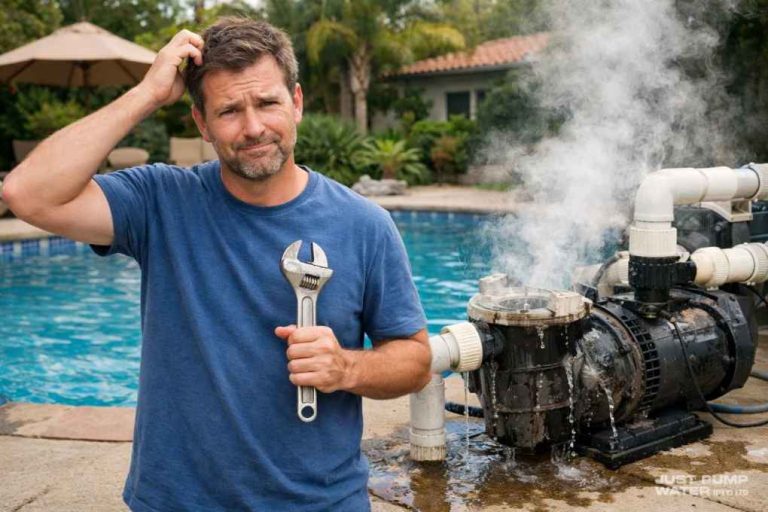
If you own an inground pool, the day will come when you face the hum, the whine, or the silence that signals a major component failure. Understanding the process for a swimming pool pump replacement is crucial for maintaining your pool’s health and your own sanity. This comprehensive guide is designed to walk you through every facet of the decision, from diagnosing the initial symptoms to selecting the right replacement unit and managing the installation.
We’ll cover the typical lifespan of pumps and motors, which generally ranges from 8 to 15 years depending on usage and maintenance, and explore the critical cost-benefit analysis that determines when a full swimming pool pump replacement becomes more economical than repeated repairs. By the end, you’ll have a clear roadmap for navigating this common but significant home maintenance project with confidence.
It’s worth noting that modern variable-speed pumps often push the upper limit of that lifespan, while older single-speed models in harsh climates may fail sooner. Recognizing the subtle early warnings—like a slight increase in energy consumption, a faint grinding noise, or water droplets at the motor shaft—can buy you valuable time to plan a replacement rather than facing a panic-driven emergency repair.
The decision to proceed with a swimming pool pump replacement isn’t one to take lightly, given the investment involved. It intersects with practical electrical knowledge, hydraulic efficiency, and long-term budgeting. In practice, pool owners often find that a motor failure around the 10-year mark is the most common trigger for this project, though a cracked pump housing or a severely worn impeller can also necessitate a full swap. This article belongs to a broader resource library on residential pool equipment maintenance and repair, providing the central reference point for all replacement choices. Let’s dive into the key considerations that will define your project’s success. A successful replacement is not just about restoring function; it’s a strategic opportunity to upgrade for efficiency, quiet operation, and better automation integration, potentially transforming your entire pool maintenance routine.
Early Warning Signs: When to Start Planning for Replacement
Proactive pool owners can often avoid a catastrophic mid-summer failure by learning to recognize the early distress signals from their pump. Beyond the obvious loud grinding or a complete failure to start, subtler signs include a persistent leak from the seal plate that doesn’t resolve with a new seal kit, indicating a warped housing or scored shaft.
Another key indicator is a motor that runs but trips the breaker after a short period, signaling failing windings or bearings that are drawing excessive current. You might also notice a gradual decline in water flow from your return jets, or the pump basket remaining surprisingly clean because water isn’t being pulled through the skimmer effectively.
If your pump is over eight years old and requires a second repair in as many seasons—be it another capacitor, another seal, or a noisy bearing—you’ve entered the “band-aid” phase. This is the most financially prudent time to start researching a swimming pool pump replacement, as you can budget for the project off-season and potentially take advantage of manufacturer rebates or end-of-season sales, turning a looming headache into a planned improvement.
Key Considerations for a Successful Swimming Pool Pump Replacement
Embarking on a swimming pool pump replacement project involves more than just swapping one metal box for another. It’s a systems-based decision that requires careful evaluation of several interconnected factors. A misstep in sizing, compatibility, or installation can lead to poor performance, higher energy bills, or even premature failure of the new equipment.
The goal is to end up with a system that’s not only functional but optimally matched to your pool’s specific volume, plumbing layout, and filtration needs. We’ll break down the four most critical areas you must address: motor sizing, part compatibility, electrical safety, and overall cost analysis. Getting these elements right transforms a daunting task into a straightforward upgrade.
Think of it as a chance to “right-size” your system; many older pools were installed with oversized pumps, so your replacement can correct this inefficiency, leading to quieter operation and noticeable savings on your utility bill from day one.
Calculating Correct Motor Sizing and Hydraulic Requirements
One of the most common mistakes during a swimming pool pump replacement is selecting a pump based solely on horsepower. Horsepower is a measure of power consumption, not hydraulic performance. The true metric you need is Gallons Per Minute (GPM) flow rate, which must be matched to your pool’s volume and the resistance of your plumbing system, known as Total Dynamic Head (TDH). An oversized pump creates excessive flow, leading to cavitation, noisy operation, and wasted energy, while an undersized one fails to properly turn over the water, compromising filtration and chemical distribution. You need to calculate your pool’s required turnover rate—typically aiming to cycle all the water every 8 to 10 hours—and then find a pump that delivers the necessary GPM at your system’s estimated TDH.
For a practical example, consider a 20,000-gallon pool. To achieve one turnover in 10 hours, you need a flow rate of approximately 33 GPM (20,000 gallons ÷ 600 minutes). However, that’s the flow rate needed at the pool, not at the pump. The pump must overcome the TDH—the sum of resistance from pipe friction, elevation changes, the filter, heater, and other equipment.
If your TDH is 50 feet, you need a pump that can deliver 33 GPM at 50 feet of head. This is where manufacturer performance curves are indispensable. Manufacturers provide pump performance curves for this exact purpose. These charts show how a pump’s flow rate (GPM) drops as the system head (feet of resistance) increases.
For a standard residential inground pool with a single-speed pump, a 1.5 HP model is often sufficient, but this is not a universal rule. A pool with extensive water features, a solar heater on the roof, or a very large filter will have higher head loss, requiring a more powerful pump to achieve the same flow. Conversely, a simple pool with short, large-diameter plumbing might perform perfectly with a 1.0 HP pump. The U.S.
Department of Energy provides guidelines on pool pump efficiency and sizing, emphasizing that proper selection is the first step toward energy savings. Ignoring these hydraulic principles can turn your swimming pool pump replacement into an ongoing headache of poor performance. A useful tip: if you’re replacing an old single-speed pump, use its model number to look up its original performance curve online. This pairs well with Inground Pool Pump Motor Replacement Options by Durability and Price, which works through concrete examples.
This gives you a real-world baseline of what GPM your existing plumbing system was designed for, which is a fantastic starting point for selecting a modern, efficient replacement. The follow-up piece Components in Pool Pump and Pool Motor Replacement covers this in more practical detail.
Matching Seals, Impellers, and Pump Housing Components
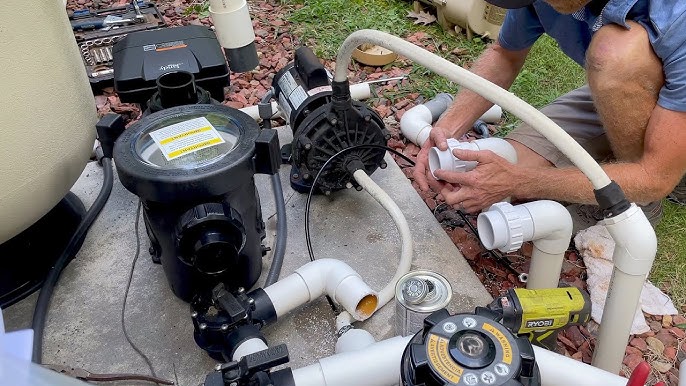
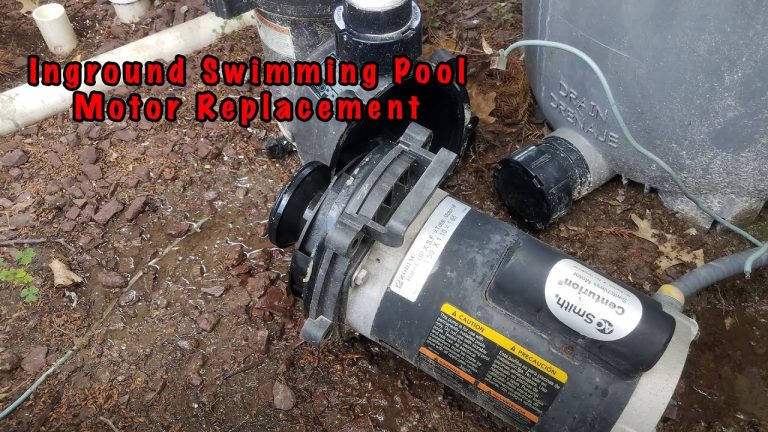
When you’re not doing a full, turn-key swimming pool pump replacement and are instead just replacing the motor, component compatibility is paramount. The motor must physically and hydraulically match the existing pump wet end (the housing that contains the impeller and diffuser). The key connection is the motor shaft, which must be the correct length and diameter to fit through the seal plate and attach to the impeller. The follow-up piece Failures that Force Swimming Pool Pump Impeller Replacement covers this in more practical detail.
A mismatched shaft can cause the impeller to sit too deep or too shallow, destroying efficiency and causing rapid seal failure. Furthermore, the seal kit—a critical set of ceramic and rubber parts that prevents water from entering the motor—must be specific to both the motor model and the pump wet end. Using a generic seal is a guaranteed path to a quick leak and a ruined new motor. A closely related walkthrough, Pool Pump Parts That Fail Most Often, and What to Replace, picks up where this section ends.
Always buy the manufacturer-recommended seal kit; the few dollars you save on a generic part are not worth the risk of a several-hundred-dollar motor failure. For the adjacent problem, Clean Pool Pump Impeller to Restore Flow Rate goes deeper into the specifics.
The swimming pool pump impeller replacement itself is a frequent sub-task. Over time, impellers can become clogged with debris or worn, reducing flow. When you install a new motor, it is almost always recommended to install a new impeller and seal kit as a set. For the adjacent problem, Pool Pump Disassembly to Trace Seal and Gasket Failures goes deeper into the specifics.
The impeller must be matched to the motor’s horsepower and service factor; a 1.5 HP motor with a high service factor might require an impeller rated for up to 2.0 HP. Trying to reuse an old, possibly imbalanced impeller on a new motor’s pristine bearings is asking for trouble. In practice, technicians keep detailed cross-reference guides from manufacturers like Pentair, Hayward, and Jandy to ensure every O-ring, diffuser gasket, and threaded connection is correct.
This meticulous attention to part matching is what separates a professional-grade swimming pool pump replacement from a makeshift fix that won’t last the season. A helpful anecdote: a homeowner once replaced only the motor on his Hayward pump, reusing the old impeller. The pump worked for a week before a screeching noise emerged. Upon disassembly, he found the old plastic impeller had a hairline crack invisible to the eye.
Under the torque of the new motor, it flexed and rubbed against the diffuser, destroying both parts and necessitating a second, more expensive repair. The lesson? In a motor replacement, the impeller and seal are consumable items—replace them proactively.
Verifying Electrical Compatibility and Safety Protocols
This is the non-negotiable, safety-critical phase of any swimming pool pump replacement. Electrical mistakes can cause equipment failure, fire, or lethal shock hazards, especially around water. The first check is voltage: Is your existing supply 115V or 230V? Installing a 115V motor on a 230V circuit will destroy it instantly, and vice-versa. The new motor’s nameplate will state its required voltage and amperage. Next, check the service factor (SF). This is a multiplier that indicates how much overload a motor can handle intermittently; a 1.5 HP motor with a 1.67 SF can actually output up to about -2.5 HP temporarily. You must ensure the new motor’s SF is equal to or greater than the old one’s to avoid overloading. A lower SF motor will run hotter and fail prematurely under the same load conditions.
Furthermore, the physical connection—the wiring—must be correct. This includes verifying the gauge of the existing wire is sufficient for the new motor’s amp draw over the distance from the breaker panel. For instance, a long run to a pool pad might require thicker gauge wire (like 10 AWG) even for a standard 1.5 HP motor to prevent voltage drop.
The National Electrical Code (NEC), particularly Article 680 which covers swimming pools, mandates specific requirements for grounding, bonding, and disconnect switches. All work should be performed with the circuit breaker locked out and tagged. For most homeowners, consulting a licensed electrician for this portion is a wise investment. It’s also the perfect time to consider upgrading to a variable-speed pump, which requires a dedicated communication cable and programming but offers massive energy savings.
A proper swimming pool pump replacement addresses these electrical details with rigor, ensuring the system is not just working, but is inherently safe for everyone who uses the pool. A practical tip: Before you even purchase a new pump, take a clear photo of the wiring connections on your old motor’s terminal plate.
This serves as an invaluable reference when connecting the new unit, ensuring you match the line (power), ground, and (if applicable) neutral wires exactly.
Analyzing Cost Factors: From Horsepower to Professional Labor
The total cost of a swimming pool pump replacement is a composite of several variables, and understanding them helps you budget accurately and avoid surprises. The first and most obvious cost is the pump unit itself. As of 2026, a standard 1.5 HP single-speed inground pool pump can range from $450 to $800.
A high-efficiency variable-speed pump, while a larger upfront investment of $1,000 to $1,800, can pay for itself in 1-3 years through reduced electricity consumption, as noted in energy guides from resources like ENERGY STAR. Many local utilities also offer rebates for installing variable-speed pumps, which can shave $200 or more off the purchase price—always check for these programs.
The swimming pool pump impeller replacement, seal kit, and other ancillary parts might add another $75 to $150 to the bill if you’re doing a motor-only swap. Don’t forget the “while you’re in there” items: new PVC glue, Teflon tape, and possibly new union seals or a pump basket if yours is cracked.
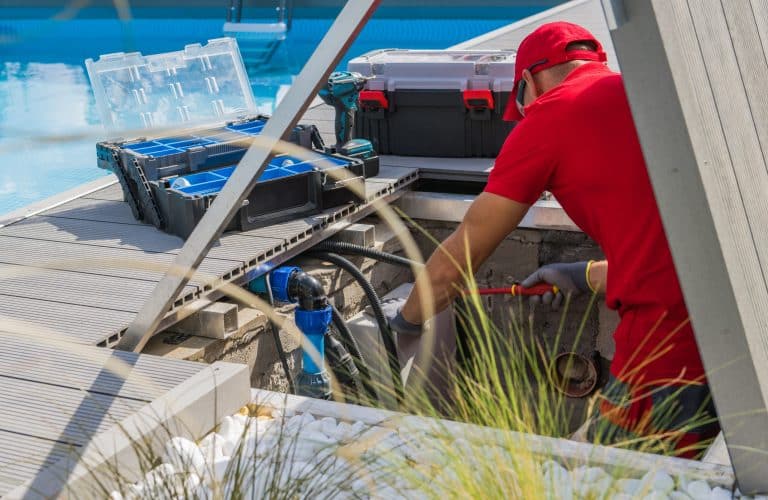
Labor is the other major component. A professional installation for a full swimming pool pump replacement typically costs between $300 and $800, depending on the complexity of the plumbing connections and electrical work. If you’re mechanically inclined and the job is a straightforward swap with compatible unions, a DIY approach can save this cost. However, if the plumbing needs to be cut and re-glued, or the electrical service requires an upgrade, professional help is justified.
It’s also prudent to get multiple quotes, as rates can vary. Some homeowners find that a complete swimming pool pump replacement kit, which includes a new pump, motor, and seal kit pre-assembled, offers the best value and simplifies installation. Remember to factor in the long-term operational cost; a more expensive, efficient pump often has a lower total cost of ownership over its lifespan, making it the smarter financial choice for a swimming pool pump replacement.
For example, running a single-speed 1.5 HP pump 8 hours a day can cost over $500 annually in some regions, while a variable-speed pump running on a low setting for 24 hours might cost under $150 for the same filtration effect. That $400 annual savings makes the higher initial investment a clear winner over a 5-7 year period.
Matching pump specs and component compatibility
As you plan your project, keep these core insights in mind to guide your decisions and ensure a successful outcome. These points distill the complex process into actionable, memorable advice.
- Horsepower is a poor standalone selector; always match the pump’s performance curve (GPM at specific head) to your pool’s hydraulic requirements for an efficient swimming pool pump replacement. A “bigger is better” mentality only leads to wasted energy and system strain.
- Component compatibility is critical—never assume a new motor will fit your old wet end without verifying shaft size, seal type, and impeller rating to avoid immediate failure. Treat the motor, seal, and impeller as a matched set.
- Electrical safety is paramount; confirm voltage, amperage, and wiring compliance with NEC Article 680, and consider hiring a licensed electrician for this phase of the work. Your family’s safety is worth the peace of mind.
- The lowest upfront cost is rarely the best value; investing in a variable-speed pump or a high-service-factor motor often yields significant long-term savings on energy and repair bills. Calculate the total cost of ownership, not just the purchase price.
- A professional diagnosis is money well spent if you’re unsure; paying for an hour of a technician’s time to confirm the need for a full swimming pool pump replacement can prevent a costly mistake. They can also spot related issues, like a failing filter or compromised plumbing, that you might miss.
- Always replace the seal and lubricate all O-rings during any pump service. A dry, cracked O-ring is the most common cause of post-installation leaks, turning a simple job into a frustrating callback.
- Document everything. Keep the manuals, write down the model and serial numbers of the new equipment, and take photos of the final installation. This creates a valuable record for future maintenance or if you ever sell your home.
Wrapping Up Your Pool Pump Project
Navigating a swimming pool pump replacement is a significant but manageable project for any dedicated pool owner. By methodically working through the considerations of proper sizing, part compatibility, electrical safety, and holistic costing, you can transform a potential source of frustration into a rewarding upgrade that ensures crystal-clear water and reliable operation for years to come. Whether you choose to tackle the installation yourself or hire a professional, the knowledge you’ve gained here empowers you to ask the right questions, source the correct parts, and make informed decisions that protect your investment. Remember, this process is not just about fixing a broken piece of equipment; it’s an opportunity to improve your pool system’s efficiency, reliability, and long-term cost of ownership. A successful replacement should result in noticeably quieter operation, consistent pressure on your filter gauge, and the satisfaction of knowing your pool’s heart is healthy and strong.
Your next steps should involve sourcing quality parts from reputable suppliers and, if needed, scheduling consultations with qualified pool service professionals. For ongoing care, remember that regular maintenance like cleaning baskets, checking seals, and winterizing properly can extend the life of your new pump dramatically. A simple monthly habit of checking the pump strainer basket and ensuring adequate water level in the pool can prevent dry-running damage.
This guide serves as a central reference within our library of pool equipment content, designed to provide authoritative, experience-based advice for homeowners. For more specific guidance on related tasks, explore our detailed articles on how to fix pool pump issues, what to expect during a pool motor replacement, and how swimming pool pump repair differs across various models. Here’s to many more seasons of effortless, refreshing swims.
Enjoy the peace of mind that comes with a job done right, and take a moment to appreciate the quiet hum of a perfectly functioning pool system—it’s the sound of a summer well-spent.
Frequently Asked Questions (FAQ)
Can I replace just the pool pump motor, or do I need the whole pump?
You can often replace just the motor if the pump housing (wet end) is in good condition—no cracks, and the threads are intact. This is a common and cost-effective approach. However, it requires meticulous part matching (shaft size, seal type, impeller compatibility). If your pump is over 10 years old, the plastic housing may be brittle, and investing in a complete pump assembly ensures all components are new, compatible, and covered under a single warranty, which many find worthwhile for long-term peace of mind.
How long should a new swimming pool pump last after replacement?
With proper installation and routine maintenance, a quality new pump should last a minimum of 8-10 years. High-efficiency variable-speed models, with their softer-start electronics and lower operating RPMs, often last 12-15 years or more. The lifespan is heavily influenced by your maintenance regimen: keeping the pump basket clear, ensuring the pool water level is adequate to prevent air suction, and protecting the equipment from harsh winter weather are all critical factors.
Is a variable-speed pump worth the extra cost for an inground pool replacement?
In almost all cases, yes. While the upfront cost is higher, the energy savings are substantial—often 70-80% compared to a single-speed pump. For a pool that runs daily, this can mean hundreds of dollars saved per year, allowing the pump to pay for itself in just a few seasons. Additionally, variable-speed pumps run much quieter, provide better filtration by allowing longer, slower run times, and put less strain on your filter and plumbing. Many utility companies offer rebates, further improving the return on investment.
What tools will I need if I attempt a DIY swimming pool pump replacement?
A basic DIY swap requires a set of screwdrivers, adjustable wrenches or channel locks, and a PVC cutter or hacksaw if plumbing modifications are needed. You’ll also need PVC primer and cement for any new joints, Teflon tape for threaded connections, and possibly a large strap wrench or impeller removal tool specific to your pump model. For electrical work, you need a voltage tester to confirm the power is off, wire strippers, and wire nuts. Having a shop vac handy to clean up any spilled water or debris from the pad area is also very helpful.
My old pump was very noisy. How can I ensure my replacement is quiet?
Noise often comes from three sources: vibration, cavitation, or motor bearings. To ensure a quiet installation, first, select a variable-speed pump, which is inherently quieter at lower speeds. Second, install the new pump on a solid, level base (a concrete pad is ideal). Use flexible PVC couplings or rubber vibration isolators in the plumbing connections to dampen vibration transfer. Finally, ensure the pump is properly primed and the system is free of air leaks, as cavitation (the formation of bubbles due to low pressure) creates a distinct rattling or grinding noise. Proper sizing, as discussed earlier, is the most important factor in preventing noisy cavitation.
Further Reading
- Five Signs Your Swimming Pool Needs a New Pump Motor This Season
- Inground Pool Pump Motors from Hayward Versus Pentair: Which Lasts Longer
- Five Indicators That Your Swimming Pool Pump Requires Immediate Service