How Long Do Pool Pump Motors Last in Typical U.S. Pools
Pool owners across the United States often ask how long do pool pump motors last. They notice this when rising energy bills appear or odd noises come from the equipment pad. In 2026 the typical range sits between five and ten years. Single-speed units tend to fall toward the shorter end. Variable-speed models stretch further with steady care.
The difference comes down to daily run hours. It also depends on water chemistry. Simple seasonal habits keep bearings cool and seals intact. This article maps those factors in detail. You can stretch motor life without guessing at every step.
Climate plays a bigger role than most realize. Homeowners in humid Gulf Coast states often see motors fail sooner. This occurs due to constant moisture exposure. Those in drier Southwest regions can push closer to the ten-year mark. They achieve this if they keep the pad shaded and ventilated.
Running the motor only during cooler evening hours helps. Replacing the capacitor proactively every four seasons extends single-speed motor life. This goes well beyond the average in most installations.
In practice many owners in Florida report motors failing around year five. Afternoon thunderstorms introduce frequent power fluctuations. These stress the windings. A shaded installation in Nevada can easily hit the full decade. Monthly visual inspections for corrosion support this.
Pool pump motors usually last five to ten years. Owners clean baskets weekly. They lubricate seals twice a year. They avoid dry runs during priming. Single-speed motors reach the lower end of that range more often. variable speed motor replacement decisions can push service life past the ten-year mark in milder climates.
In practice a motor that has been running eight hours a day in balanced water chemistry will outlast one. The other runs on continuous duty in a pool with high calcium hardness. Many owners discover that switching to a variable-speed unit cuts electricity costs. It also reduces heat buildup inside the windings. This directly extends the interval before pool pump motor repair becomes necessary.
Homeowners who track motor temperature with an infrared thermometer often notice something. Variable-speed models stay fifteen to twenty degrees cooler during low-speed overnight cycles. This directly translates into less thermal stress on the bearings and windings over time.
Another factor that influences longevity is the quality of the original installation. Motors mounted on uneven pads or exposed to direct afternoon sun can experience premature bearing wear. Vibration and heat combine to break down grease faster than expected. Building a simple shade structure over the equipment pad helps. Adding rubber isolation pads under the motor feet dampens vibration. This often extends motor life by reducing heat and vibration stress.
Key Maintenance Routines That Influence Motor Longevity
Basket and Impeller Cleaning Frequency
A clogged basket forces the motor to work harder. It raises internal temperatures and shortens bearing life. Most residential systems need the basket emptied once a week during heavy use. They need it at least every ten days when swimmer load drops. The impeller itself collects debris over months. Removing the volute housing every six months lets you clear hair and leaves that reduce flow.
Hayward Super Pump and Pentair SuperFlo VS owners report smoother operation after this routine. The motor no longer fights restricted suction. Skipping the task for an entire season can drop flow enough to overheat windings. It triggers early failure. Keeping a simple calendar reminder prevents the gradual performance slide. This leads many owners to ask how long do pool pump motors last after only four years of service.
A practical tip is to keep a dedicated five-gallon bucket and garden hose nearby. You can rinse debris outdoors instead of letting it wash back into the skimmer. Owners who also inspect the impeller vanes for hairline cracks during the same service interval often catch small issues. They catch them before they turn into expensive pool pump motor repair jobs. The follow-up piece Pool Pump Motor Repair Compared to Full Replacement covers this in more practical detail.
Seal and O-Ring Lubrication Schedule
Pool pump shaft seals keep water away from the motor bearings. Yet they dry out and crack when left untouched. A light coat of silicone-based lubricant applied to the O-ring and seal face twice a year prevents leaks. These would otherwise reach the windings. The job takes about fifteen minutes once the pump is isolated and drained.
Manufacturers list this step in every manual. A worn seal lets moisture migrate inward. It rusts the shaft and raises amp draw until the motor trips the breaker. Variable speed units suffer the same issue even though they run cooler overall. Consistent lubrication therefore directly answers the question of how long do pool pump motors last. It removes one of the most common early failure points.
Consider marking the pump lid with a paint pen after each lubrication. You never lose track of the last service date. Technicians recommend using only food-grade silicone lubricant. Petroleum-based products can swell the rubber components. They create new leak paths within a single season.
Priming Technique to Avoid Dry Runs
Dry running destroys bearings in minutes. The shaft spins without water lubrication or cooling. Fill the pump basket and strainer housing completely before starting the motor. Then crack the lid just enough to bleed trapped air. Run the pump for thirty seconds. Shut it off and repeat until steady flow returns through the return lines.
Never rely on the motor to pull prime on its own. That practice overheats the windings and scores the seal surface. In most systems this careful sequence adds years to motor life. The bearings never experience the heat spike of an air-bound start. Owners who master the technique notice fewer service calls. They rarely need to question how long do pool pump motors last before the eight-year mark.
An easy habit is to keep a small cup of water handy during spring startup. You can top off the basket without walking back to the hose each time. Many pool professionals also suggest installing a clear lid on the strainer. You can visually confirm prime without removing the cover repeatedly.
Winterizing Steps for Motor Protection
Cold weather contracts metal and rubber parts. Proper winterizing keeps moisture from freezing inside the seal cavity. Drain the pump housing completely. Remove the drain plugs and store them in a labeled bag. Cover the motor with a breathable weatherproof shield rather than plastic that traps condensation. In regions that see hard freezes disconnect the power. Rotate the shaft by hand every month to keep grease distributed.
These steps stop ice from pushing the seal out of position. They keep water from reaching the bearings during spring startup. Systems that receive this attention routinely reach the upper end of the range. Owners later ask how long do pool pump motors last. One common mistake is using a leaf blower to clear water. The force can damage the seal. A simple gravity drain is always safer.
In addition wrapping the motor loosely with an old towel inside the cover can absorb any residual condensation. This forms during temperature swings.
Run-Time Schedule Optimization
Running a pump twenty-four hours a day shortens motor life even when the water stays clear. Most pools need only eight to twelve hours of filtration daily once the water is balanced. Variable-speed models can drop to 1200-1500 RPM overnight and still maintain clarity. They cut both electricity use and bearing wear. Single-speed motors benefit from a simple timer set to run during off-peak hours when ambient temperatures are lower.
The reduced heat load inside the motor housing adds measurable service life. Tracking actual run hours on a calendar shows the direct link between schedule and the answer to how long do pool pump motors last in any given climate. Installing a basic smart plug with usage tracking lets you review monthly totals on your phone. You spot when the schedule drifts.
Many owners also program their variable-speed units to run at higher speeds only during the coolest part of the day. This further reduces thermal stress on the motor.
Voltage Supply and Electrical Checks
Fluctuating voltage from aging home wiring or overloaded circuits quietly shortens motor life. It causes the windings to run hotter than designed. Test outlet voltage at the equipment pad during peak load periods. Readings consistently below 230 volts on a 230-volt motor signal the need for an electrician. Adding a dedicated surge protector rated for pool equipment can prevent damage from summer thunderstorms. These otherwise lead to premature pool pump motor repair. Many variable speed motor replacement jobs trace back to repeated low-voltage stress rather than mechanical wear. Checking connections for corrosion once a year and tightening terminal screws can also prevent voltage drops that influence how long do pool pump motors last. These silently degrade motor performance over multiple seasons.
Early Signs That Trigger Repair Before Total Failure
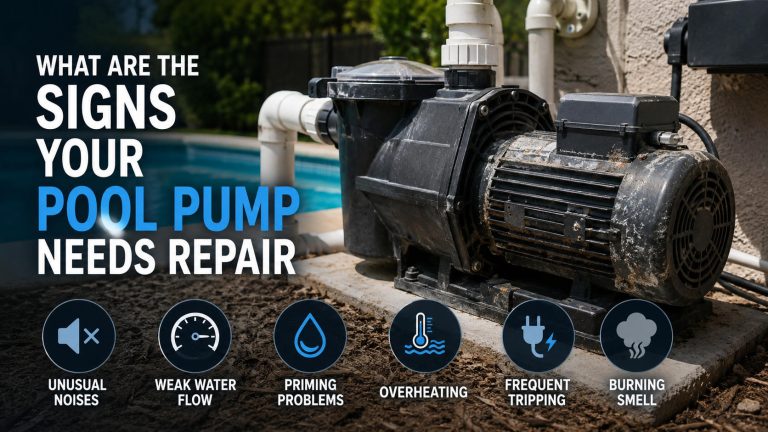
Unusual humming, grinding, or a hot motor housing after only thirty minutes of run time signals bearing wear or voltage issues. A small drip from the seal area after the pump sits overnight usually means the mechanical seal has begun to fail. Catching these symptoms early allows a seal swap or capacitor replacement before the motor windings overheat and short out.
Pool pump motor repair at this stage costs far less than full variable speed motor replacement. Ignoring the first warning signs often leads owners to replace the entire pump when only the motor needed attention. Logging the date and symptom each time something changes helps predict remaining service life. It keeps the question of how long do pool pump motors last from becoming a surprise.
Keep a cheap infrared thermometer in the equipment shed. Checking housing temperature monthly gives an early numeric clue before noise appears. Listening for changes in pitch during startup can also reveal bearing problems weeks before they become catastrophic.
Capacitor Inspection and Replacement
The start capacitor helps the motor overcome initial inertia. It degrades silently over time from heat cycles. Testing the capacitor with a multimeter every spring can identify weak units before they cause hard starts that stress the windings. Replacement capacitors are inexpensive and take only a few minutes to swap. Yet many owners skip this step until the motor fails to start altogether and wonder how long do pool pump motors last. Keeping a spare capacitor on hand prevents emergency pool pump motor repair calls during peak swimming season.
Maintenance Actions and Their Measured Effect on Motor Lifespan
- Weekly basket cleaning removes debris that raises motor temperature and typically adds one to two years of service life.
- Twice-yearly seal lubrication prevents moisture damage that commonly ends motors at the five-year mark.
- Proper priming technique eliminates dry-run events that destroy bearings in a single afternoon.
- Complete winterizing steps protect against freeze damage that forces early variable speed motor replacement.
- Optimized run times lower daily heat load and shift average lifespan from six years toward ten years.
- Annual voltage checks and surge protection catch electrical stress before it cooks windings and often extends service another two seasons.
These actions work together. For example combining weekly basket cleaning with proper priming can compound the lifespan gains. The motor never has to overcome both restricted flow and air pockets at the same time. Many long-term pool owners report that adding the simple step of annual voltage testing often prevents the most expensive failures. These occur right after summer thunderstorms.
Recording Maintenance Dates to Protect Future Decisions
Consistent routines compound over time. A motor that receives weekly basket care, seasonal lubrication, careful priming, and winter protection will usually reach eight to ten years. It avoids failing at five. Keep a simple notebook or phone note with the date of each task and any observation about noise or temperature.
When the time comes to decide between pool pump motor repair and variable speed motor replacement those records show whether the unit has been treated well enough to justify another repair cycle. The cumulative effect of small habits turns the common question of how long do pool pump motors last into a predictable outcome rather than a gamble. Start the log this week and the motor will thank you with quieter, longer service.
Many owners also photograph the motor data plate and file it with their notes. Replacement decisions include exact model numbers and installation dates without searching the pad in the dark. Digital maintenance apps that send reminders make it even easier to stay on schedule. Some allow photos of each service step to be attached directly to the record for future reference when selling the home.
Further Reading
- Step Sequence for Replacing a Variable Speed Pool Pump Motor
- Five Frequent Pool Pump Motor Issues and Their Solutions
- Pool Pump Motor Repair Compared to Full Replacement
- Frequent Pool Pump Motor Issues and Their Repair Paths
- Steps to Replace a Variable Speed Pool Pump Motor