Typical Pressure Drop on S200 Filters After Two Seasons
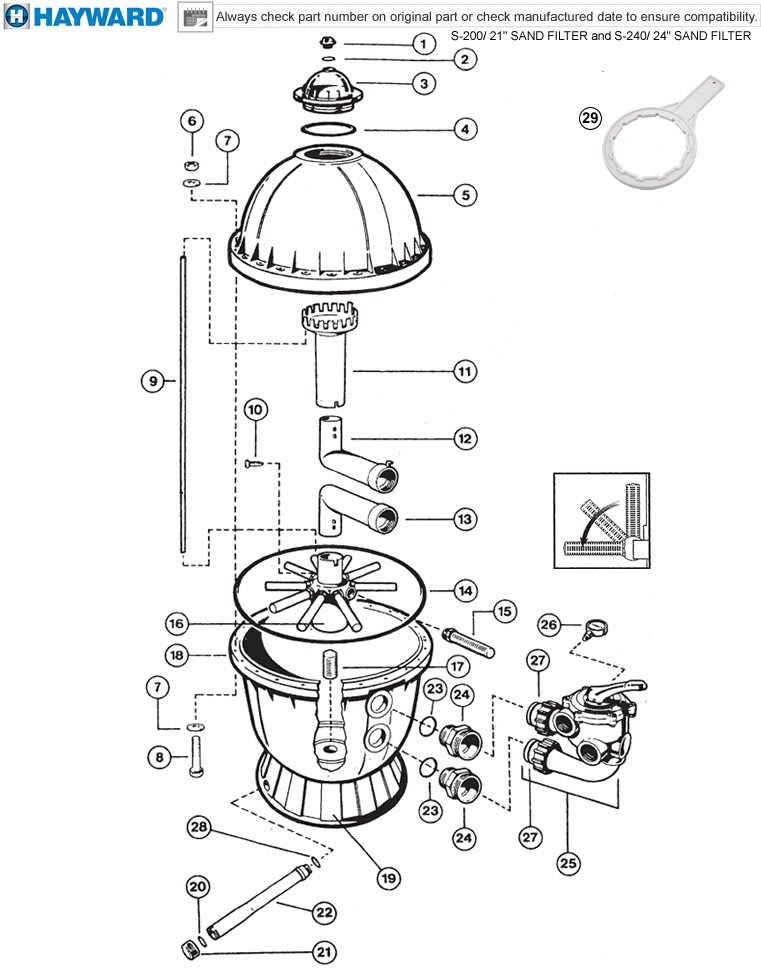
Pool owners across the United States often notice a gradual drop in flow rate on their Hayward S200 sand filter. This happens after roughly two seasons of regular use. The filter begins to restrict circulation even when the pump runs at full speed. Pressure readings on the gauge climb above the normal clean range. This change usually stems from accumulated debris, compacted sand, or small mechanical wear rather than outright failure.
hayward s200 sand filter troubleshooting starts with confirming the symptom before any parts come off. Most systems show the same pattern once summer heat and heavy bather loads push more material through the filter. Addressing the issue early prevents the pump from working harder and shortens filter life.
The steps below focus on restoring normal flow without replacing the entire tank. Each action targets one common cause so you can isolate the problem quickly.
Hayward s200 sand filter troubleshooting restores circulation in most cases. Owners follow a logical sequence rather than guessing at parts.
Seven Steps for Hayward S200 Sand Filter Troubleshooting
-
Check and clean skimmer basket
Begin by turning off the pump and removing the skimmer basket. Empty any leaves, twigs, or fine grit that block water entry. Rinse the basket under a hose until the mesh is completely clear, then inspect the weir door for free movement. A clogged basket immediately reduces flow before water even reaches the filter. This step often improves pressure readings right away. Repeat the check weekly during heavy use periods to keep debris from building up again. In most systems this simple task prevents the pump from straining against restricted suction. A closely related walkthrough, Dirty Filter Low Pressure Causes and Solutions, picks up where this section ends.
-
Perform a full backwash cycle
Switch the multiport valve to the backwash position and run the pump until the sight glass shows clear water. This process loosens compacted sand and flushes out trapped dirt that reduces effective filtration area. Allow the cycle to finish completely, then rinse for thirty seconds before returning to filter mode. Many owners skip the rinse step and leave residual dirt in the lines. This quickly recreates the low-flow condition. A proper backwash restores flow in roughly half of reported Hayward S200 cases. Perform it at the correct pressure rise of eight to ten pounds.
-
Inspect laterals for cracks
Remove the top of the filter tank and shine a light inside to examine the lateral arms at the bottom. Look for hairline cracks or missing sections that let sand escape into the return lines. Cracked laterals allow media to migrate. This clogs pipes and drops flow rate even after a fresh backwash. Replacement laterals cost far less than a new tank. They usually restore normal operation when installed with fresh o-rings. Check the condition of the laterals every two years or whenever sand appears in the pool.
-
Replace multiport valve o-rings
Shut off power and water supply, then remove the multiport valve handle and cover. Pry out the old o-rings around the valve stem and replace them with new ones sized exactly for the S200 model. Worn o-rings allow bypass that reduces effective filtration and creates erratic pressure readings. Lubricate the new rings lightly with pool-safe silicone before reassembly. This five-minute swap often solves high-pressure complaints that backwashing alone cannot fix.
-
Verify pump basket seal
Open the pump lid and inspect the basket for debris that blocks suction. Check the lid o-ring for flattening or tears that let air enter the system. Air leaks reduce prime and lower flow through the entire filter circuit. Clean the basket thoroughly and reseat the lid firmly after applying a thin film of lubricant to the gasket. A tight seal here ensures the pump moves the full rated volume of water to the S200 tank.
-
Bleed air from the filter
Locate the air relief valve on top of the filter tank and open it slowly while the pump runs. Allow air to escape until a steady stream of water appears, then close the valve. Trapped air pockets restrict water movement and create false pressure readings on the gauge. Repeat the process after any maintenance that opens the system. Consistent bleeding keeps circulation steady and protects the laterals from uneven flow.
-
Run a timed flow test
With the system back in filter mode, measure how long it takes to fill a five-gallon bucket from a return line. Compare the result to the pump’s published flow rate at your current head pressure. A healthy S200 setup should deliver close to the rated gallons per minute once all prior steps are complete. Record the number and repeat the test after two weeks of normal operation. Consistent readings confirm the hayward s200 sand filter troubleshooting sequence succeeded.
Frequent Errors During Hayward Sand Filter Troubleshooting
- Over-backwashing: ❌ Running backwash cycles too long strips the sand bed and wastes water. ✅ Stop when the sight glass clears, usually after one to two minutes.
- Wrong sand grade: ❌ Using play sand or masonry sand that packs too tightly. ✅ Always install #20 silica sand rated for pool filters and fill to the marked level inside the tank.
- Ignoring the pump basket: ❌ Focusing only on the filter while the pump struggles with a clogged basket. ✅ Clean both components in the same session so suction and filtration improve together.
- Skipping the rinse cycle: ❌ Returning directly to filter mode after backwash leaves dirt in the lines. ✅ Always follow backwash with a thirty-second rinse to settle the bed.
When the Seven Steps Resolve Flow Issues or Signal Tank Replacement
Following the sequence above fixes low flow on the Hayward S200 in most residential pools. For other models, see what to check when a Hayward sand filter is not working. The problem stems from routine maintenance issues. If pressure and flow return to normal after the timed test, continue with regular backwashing and seasonal sand checks to maintain performance.
When flow remains restricted after all seven steps, hayward s200 sand filter troubleshooting shows the tank itself may have internal damage. Examples include a failed laterals assembly or shell cracks that no external adjustment can correct. At that point compare the cost of a new S200 against professional repair quotes. Many owners choose replacement once the unit reaches eight to ten years. Newer models offer better flow efficiency and easier maintenance.
Proper hayward s200 sand filter troubleshooting that follows this order saves time and avoids unnecessary part purchases. Keep records of each step so future issues become easier to diagnose quickly.
You May Also Like
- Sand Versus Cartridge Versus DE Hayward Filters When Flow Drops
- Five Frequent Hayward Filter Failures Owners Encounter Each Season
- Eight Pool Filter Failures Homeowners Encounter Most Often
- Pool Pump Pressure Basics and the Parts That Control Flow Rate
- Intex Pump Models Compared for Resistance to Low Flow Problems