The Impact of Air on Pool Pump Performance
Air entering a circulation system reduces the pump’s ability to move water effectively. Bubbles disrupt the impeller, lower pressure, and allow debris to pass through the filter media. Over time this leads to cloudy water, weak returns, and higher energy use. An air leak in pool filter often shows up first as a sputtering sound or visible bubbles in the pump basket. Owners who notice these signs early can prevent motor strain and avoid costly downtime.
The problem appears across sand, cartridge, and DE units. Loose fittings, aged gaskets, and small cracks each allow air to seep in when the pump pulls a vacuum. Regular visual checks and pressure readings help catch issues before filtration efficiency drops.
An air leak in pool filter usually enters through one of five common points. Loose unions, worn gaskets, housing cracks, misaligned valves, and blocked vents account for most cases reported by pool service technicians.
Common Entry Points for Air in Pool Filter Systems
Loose Pump Unions
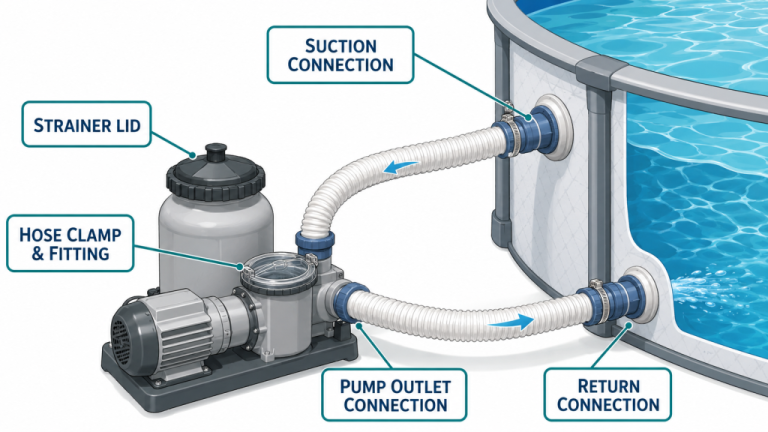
Pump unions sit between the motor and the filter housing. Vibration from daily operation slowly loosens the threaded collars. When the seal breaks, air is drawn in on the suction side. A homeowner can check this by feeling for moisture around the union nut and listening for a slight hiss when the pump runs. Tightening the collar or replacing the O-ring often stops the air leak in pool filter within minutes. In most systems this is the first place to inspect because unions see constant movement.
Typical residential setups use 1½-inch or 2-inch unions. Over time the rubber gasket flattens and loses its ability to compress. A quick hand-tight plus quarter-turn with a wrench restores the seal on Hayward Super Pump and Pentair SuperFlo models alike.
Worn Lid Gasket
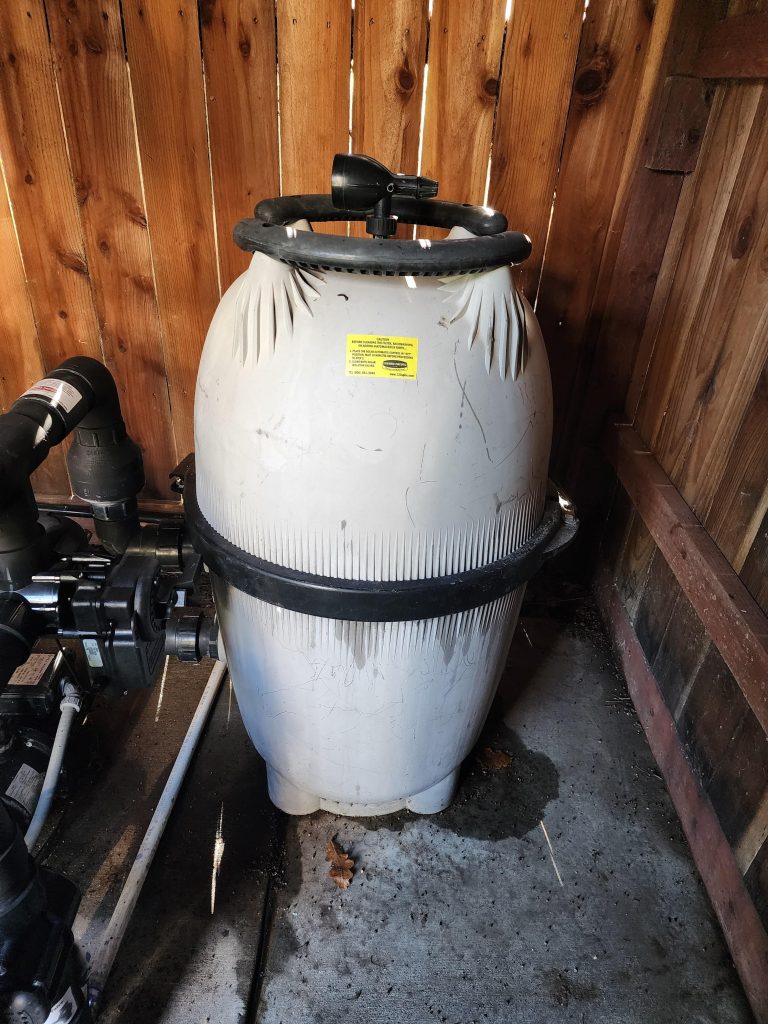
The filter lid gasket creates the seal at the top of the tank. Chlorine, heat, and repeated opening cause the material to harden and crack. Once the gasket fails, air slips past during the suction cycle. Many owners first notice the air leak in pool filter when the pressure gauge shows normal readings yet flow remains weak. Replacing the gasket costs little and takes less than ten minutes on cartridge or DE housings.
Look for flat spots or small splits along the inner edge. A new gasket restores full prime and eliminates the sputtering sound. This repair works on both above-ground and in-ground systems without special tools.
Cracked Filter Housing
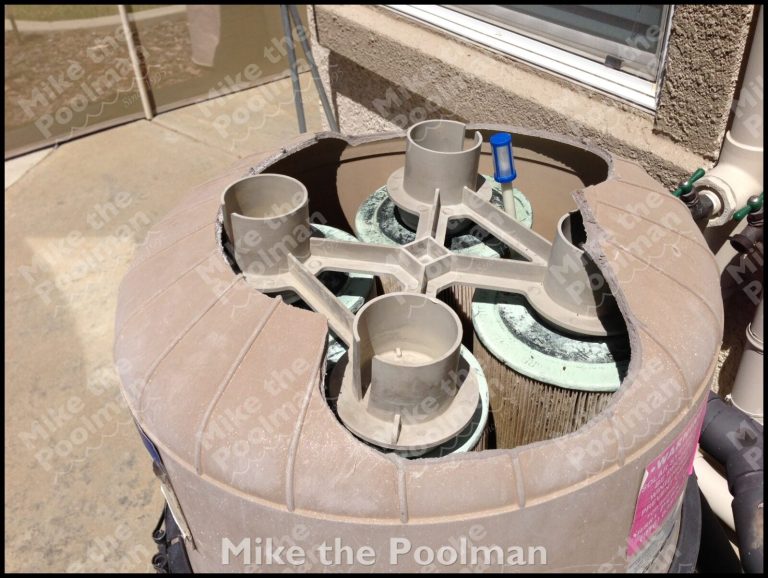
Filter tanks made of fiberglass or ABS plastic develop hairline cracks from freeze-thaw cycles or impact. A crack on the suction side lets air enter even when the lid is tight. The air leak in pool filter becomes noticeable after the pump sits overnight because air collects in the housing. Pressure tests with a plug kit reveal the location quickly.
Small cracks can sometimes be sealed with epoxy rated for pool chemicals. Larger damage usually requires tank replacement. Checking the exterior for white stress lines helps catch this issue before it worsens.
Valve Misalignment
Multiport valves and diverter valves contain internal seals that wear with age. When a valve sits slightly off position, air can bypass the intended flow path. The resulting air leak in pool filter system often appears only after backwashing or when switching between filter and rinse modes. Turning the handle firmly into each detent usually restores proper sealing.
Owners who see persistent bubbles after valve changes should inspect the spider gasket inside the valve body. Replacement takes about thirty minutes and uses basic wrenches. This step prevents air from entering the filter housing downstream.
Clogged Vent
Some filters include a manual air vent or automatic bleeder on the lid. When debris blocks the vent opening, trapped air has nowhere to escape and instead finds another path into the system. The air leak in pool filter then shows up as a steady stream of bubbles at the returns. Cleaning the vent screen or replacing the bleeder assembly removes the restriction.
Regular rinsing of the vent during monthly maintenance keeps the path clear. This simple habit stops air from forcing its way past other seals in the plumbing.
Top Overlooked Air Entry Points
- Check the pump basket lid O-ring first because it sits on the suction side and dries out faster than most gaskets.
- Inspect heater unions next since they often receive less attention yet sit directly in the return line.
- Examine winterizing plugs and drain caps at the end of each season because temperature swings loosen these fittings over time.
Systematic Inspection Starting at the Lid
Begin at the filter lid and work downward through the plumbing. Tighten every union one-quarter turn past hand tight, then replace any gasket that shows flattening or cracks. Test the system by running the pump and watching for bubbles in the basket. Most air leak in pool filter issues resolve with these steps. When the problem persists, note the pressure readings before and after each repair to confirm the fix. Regular checks every few weeks keep the circulation system quiet and efficient. If the motor begins to overheat or prime becomes difficult, consider professional service or review resources on how long does a pool pump motor last to decide between repair and replacement. Consistent attention prevents small leaks from turning into larger circulation problems.
Key Points
- Item 1: Loose Pump Unions Pump unions connect the motor to the filter housing and are prone to loosening from daily vibration. When the threaded collar slips, air enters the suction side, causing sputtering sounds and visible bubbles in the basket. This air leak in pool filter reduces impeller efficiency and strains the motor over time. Homeowners should inspect for moisture around the nut and listen for hissing during operation. Tightening the collar or swapping the O-ring typically resolves the issue quickly and prevents debris bypass or cloudy water. Regular checks catch problems early across sand, cartridge, and DE systems.
- Item 2: Worn Lid Gasket The lid gasket seals the filter housing but degrades from age, chemicals, and pressure cycles. Cracks or flattening allow air to seep in under vacuum, leading to weak returns and higher energy consumption. An air leak in pool filter often starts here before progressing to motor damage. Users can check by examining the gasket for wear and ensuring proper seating after cleaning. Replacement is inexpensive and restores full pressure readings. This ranks second because gaskets fail gradually yet affect every filter type when neglected during seasonal maintenance.
- Item 3: Cracked Filter Housing Small cracks develop in plastic housings from UV exposure, freezing, or impact. These openings draw air on the suction side, disrupting flow and letting debris pass the media. Early detection of an air leak in pool filter prevents costly motor burnout. Visual inspection under good lighting reveals hairline fractures near ports or seams. Epoxy repairs or full housing replacement may be needed depending on severity. This cause appears frequently in older installations and demands prompt attention to maintain filtration efficiency.
- Item 4: Valve Misalignment Multiport or slide valves can shift out of position from improper turning or worn seals. Misalignment creates gaps that pull air into the system during pump operation. The resulting air leak in pool filter produces erratic pressure and sputtering at returns. Technicians recommend verifying valve settings match the desired mode and lubricating o-rings annually. Realigning or replacing the valve stops the leak without major expense. This issue ranks fourth yet causes widespread performance drops when valves are forced or left partially open.
- Item 5: Clogged Vent Air relief valves or vents on the filter lid become blocked by debris, scale, or corrosion. When blocked, trapped air cannot escape and instead forces its way through other weak points. An air leak in pool filter then manifests as cloudy water and reduced circulation. Cleaning the vent with a soft brush and flushing the line restores proper function. This final common entry point is easiest to prevent through monthly visual checks and pressure monitoring before efficiency declines further.
Further Reading
- Diagnosing Every Type of Leak Reported in Pool Filter Systems
- Repair a Pinhole Leak in a Pool Filter Housing
- Persistent Issues Across DE, Sand, and Cartridge Pool Filters
- Sand Filters Compared with DE Filters on Leak and Flow Problems
- Seven Pool Filter Failures That Let Algae Reach the Water