Where Pump Leaks Start and Why the Brand Matters
You walk out to the pool and see water beading on top of the pump, or running down the side of the housing. It’s a frustrating sight, and it usually points to one of a few specific spots. A flowclear pool pump leaking problem, an Intex unit dripping from the top, and a Coleman pump weeping at the base all tend to share a symptom. They do not always share a source. This article covers the most common places water escapes from budget above-ground pumps, and how to tell them apart.
Most top-of-pump leaks come from three areas: the lid, the strainer basket seal, and the union or hose connection. Where the water shows up on the housing, and whether it drips when the pump is running or only after it sits, gives you useful clues. The exact part also varies by brand, so the sections below are organized to help you match your model quickly.
Pool pumps are centrifugal machines that move water through a filter, and they’re built to hold that water under pressure. Any gap in a seal, lid, or fitting becomes a leak path. For a general look at how these machines work, the Wikipedia article on centrifugal pumps explains the basic design.
Short answer: a flowclear pool pump leaking from the top almost always has a failed seal, a loose fitting, or a cracked housing. The most common culprits are the lid O-ring, the strainer basket gasket, and the union nuts that join the pump to the plumbing. Check the lid first, then the basket, then the unions. A dye or paper towel test will confirm which part is wet before you buy anything.
Finding the Source of Water Escaping From the Pump Top
Start by turning the pump off and letting the system drain down. A leak that looks active under pressure can be hard to trace when everything is static. Dry the housing completely with a towel. Then turn the pump back on for a minute and watch where the first droplet forms. That spot is your best lead.
Lid and Lid O-Ring Leaks
The lid is the most frequent source of top leaks on budget pumps. It seals against the housing with a rubber O-ring, and that ring is compressed every time the lid is tightened. Over time the rubber dries out, flattens, or picks up grit that prevents a clean seal. Water then wicks out around the rim and often runs down the outside of the housing, which can make it look like the leak is somewhere else.
To check this, open the lid and inspect the O-ring for cracks, flat spots, or debris. Clean the groove with a soft cloth and remove any hair or sand. Apply a thin coat of silicone-based pool-safe lubricant, not petroleum jelly, which can damage rubber over time. Seat the O-ring evenly and tighten the lid hand-tight, then a quarter turn more if the design allows. Over-tightening can crack the lid’s plastic threads, so go slowly.
If the ring looks intact but still leaks, the lid itself may be warped or cracked near the clamp points. In that case, replacing the lid assembly is usually cheaper than fighting a damaged seating surface.
Flowclear Pool Pump Leaking at the Strainer Basket Seal
On many Flowclear-style pumps, the strainer basket sits in a chamber just below the lid and is sealed by its own gasket. The basket catches leaves and debris before they reach the impeller. When the gasket hardens or the basket cap is cross-threaded, water can seep past the seal and appear to come from the top of the pump. Many owners mistake this for a lid problem.
The difference is in the timing and the pattern. A basket seal leak often shows up only when the pump runs at full pressure, and the wet area tends to sit right under the basket cap. Pull the basket and check its gasket. Look for a flattened ring, a nick, or a bit of debris caught in the groove. Clean the basket chamber and reseat the gasket with the cap threads clean and dry.
A worn basket seal is a common part to replace, and it’s usually inexpensive compared with the pump itself. If the seal is fine and the cap won’t tighten without leaking, check the threads on both the cap and the housing for stripping or cracks.
Intex Union and Hose Clamp Leaks
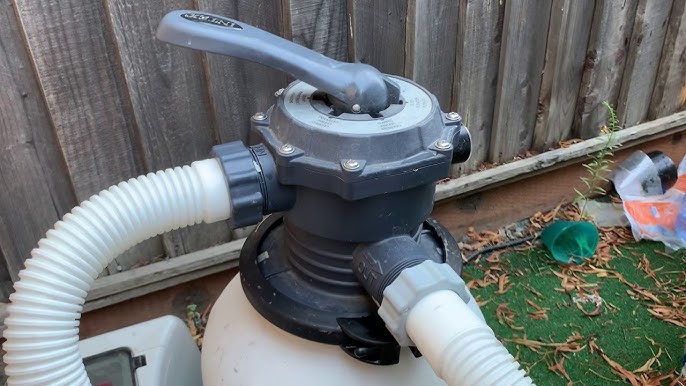
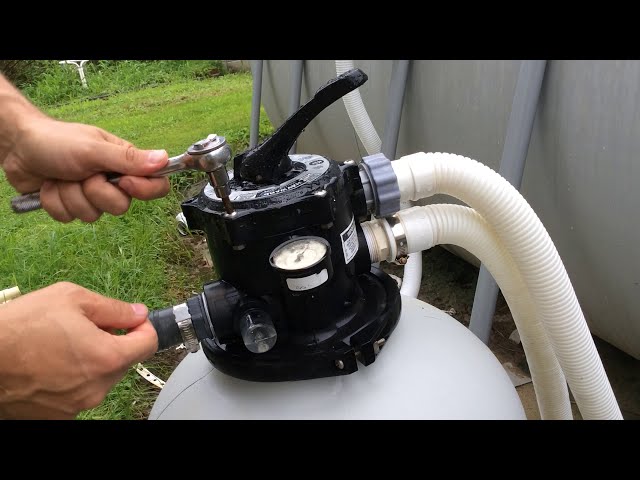
Intex pumps and their related filter setups rely heavily on unions and hose clamps to join the pump to the plumbing. A union is a threaded joint with a rubber gasket, and it’s a frequent weak point when the connection is repeatedly loosened and retightened for winterizing or cleaning. A clamp that was snug the first season can slowly lose grip as the plastic and rubber settle.
Check the union nuts by hand first. If one moves, tighten it gently and watch whether the drip stops. If it keeps leaking, take the union apart and look at the gasket. A flattened or cracked union gasket should be replaced with the same size. For hose clamps, make sure the clamp sits on the barbed fitting and not on the edge of the hose. A clamp in the wrong spot can look tight while leaking underneath.
Water that runs from the union down the pump housing is easy to confuse with a lid leak. Dry everything, run the pump briefly, and see which joint gets wet first. Don’t rely on the drip’s final location, since gravity moves water a long way.
Coleman Housing Cracks and the Filter Housing Crack Question
Coleman pool filter pump units sometimes develop cracks in the plastic housing, usually near the mounting feet, the inlet and outlet ports, or the top of the pump body. A crack is more serious than a worn seal because it can’t be fixed by tightening anything.
Cracks often come from freezing water inside the housing, from the pump being dropped or bumped, or from years of vibration and sun exposure weakening the plastic.
Look at the housing when it’s dry and under light. A hairline crack may only show when the pump is running and pressurized, so run the system and watch closely. The wet line will follow the crack, sometimes running downward for several inches.
If you find a crack, shut the pump down right away, because running a cracked housing can pull air into the system and damage the motor seal. A cracked housing is one of the cases where repair is rarely practical. Our article on the filter housing crack question explains when it makes sense to replace rather than patch.
Some owners try epoxy or sealant on a crack. That can buy time on a non-pressure area, but it rarely holds on a part that sees constant pressure and temperature swings. Treat any sealant repair as temporary.
Diagnosing the Leak With a Dye or Paper Towel Test
When the source isn’t obvious, a simple test narrows things down. Dry the pump completely. Wrap a strip of dry paper towel around each suspect joint: the lid rim, the basket cap, and both union nuts. Run the pump for a few minutes, then check each towel. The wet one marks the leak.
For a more visible result, use a few drops of food coloring or a dedicated pool dye near each joint while the pump runs. Colored water will show you the exact path, even on a dark housing. Work in a bright area, and shut the pump off before you touch anything.
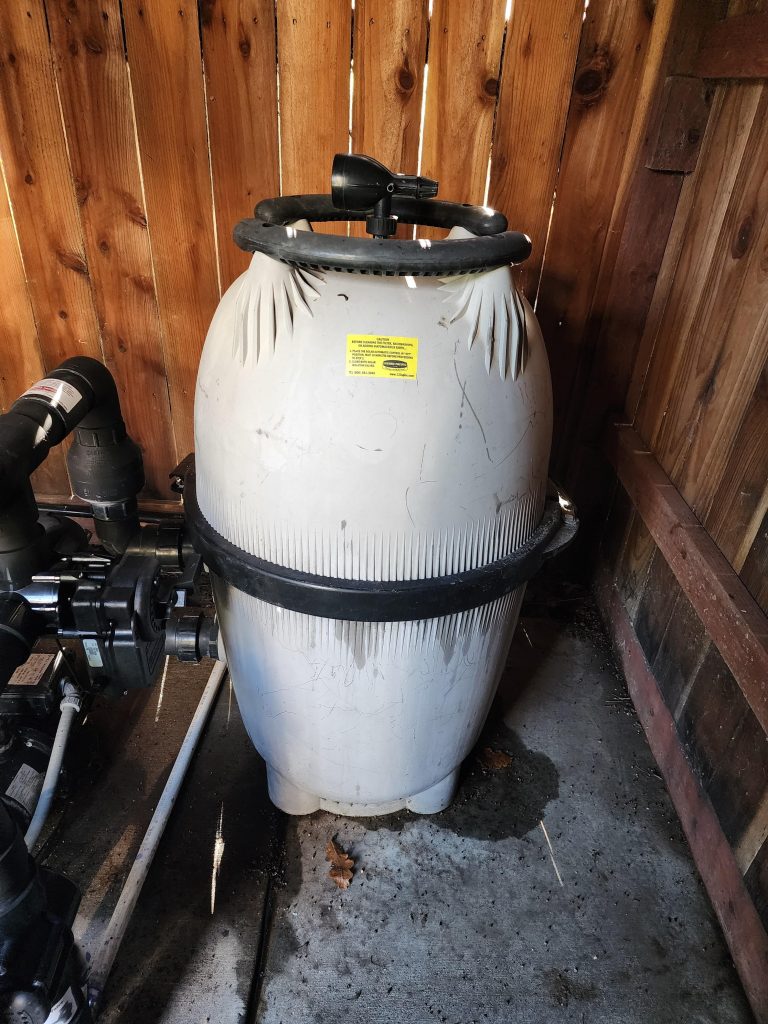
This test is also useful for telling a pump leak apart from a leak in the filter tank. A pinhole leak in pool sand filter tanks is a different problem with a different fix. It often shows up lower on the tank rather than at the pump top. If the water is clearly coming from the tank wall, you’re dealing with a separate issue.
Be honest about the limits here. A paper towel test can’t tell you whether a gasket is worn inside its groove, and it won’t reveal a crack hidden under the housing’s mounting feet. If the test is inconclusive after two rounds, it may be time for a technician with pressure-testing tools.
Three Leak Sources That Account for Most Cases
- The lid O-ring is the most common source, and cleaning and re-lubricating it often fixes the problem.
- The strainer basket gasket causes leaks that appear under pressure, and replacing it is usually a quick repair.
- Union nuts and hose clamps leak when joints loosen, and a new gasket or a properly seated clamp corrects them.
Low water pressure in pool pump systems can also follow a leak, because air drawn in at a bad joint reduces flow. If you notice both symptoms together, check the top connections before assuming the impeller is failing.
Matching Your Brand to the Right Fix
Start with the symptom, then match it to your pump brand and the section above. A wet lid rim points you to the O-ring. A leak that appears only at full pressure, under the basket cap, points to the strainer gasket. A wet union or loose clamp points to the plumbing joints. A crack in the housing body is the one case where you should plan on replacement rather than repair. If you have a flowclear pool pump leaking and repairs keep failing or the housing is damaged, a repair-or-replace comparison will help you weigh parts cost against the price of a new pump.
Related Topics
- Troubleshooting Your Pentair Quad DE Filter
- Intex Sand Filter Leaking From the Top: What Actually Causes It
- Hayward Filter Versus Other Pool Filter Systems: Which Suits Your Pool?
- Leaking From the Backwash or Waste Port? What the Valve Position Tells You
- Saltwater Versus Sand Pump Performance Under Low Pressure Conditions