Why Your Pool Pump Loses Pressure and What Usually Causes It
Low water pressure in pool pump systems is one of the most common complaints pool owners raise, and it rarely comes from one dramatic failure. More often it builds slowly, with a little less flow each week until the skimmer barely pulls water and the return jets feel weak. Many owners first notice it during a weekend cleaning session when the vacuum head seems to lose its grip on the pool floor. The good news is that most of the usual culprits are simple to spot once you know where to look. Here is the short version: the four factors that cause most pressure loss are a clogged pump basket, a saturated filter, a misaligned multiport valve, and worn impeller vanes. Each one has a distinct signature, and once you learn those signatures, you can usually narrow the problem down in under an hour without calling anyone.
Low water pressure in pool pump setups usually shows up at the gauge first. A clean filter often reads around 10 psi, and a reading that climbs 8 to 10 psi above your clean baseline is the standard signal to backwash or clean the filter, according to guidance from the swimming pool filter overview. That is why logging your gauge reading right after each cleaning is so useful. Without a baseline, you have no way of knowing whether 14 psi is normal for your system or a sign of trouble. Pressure that drops is a different story, and it points to restriction or wear somewhere between the skimmer and the return. A high reading with weak flow usually means a clog on the filter side, while a low reading with weak flow often means air leaking into the suction line or a tired pump.
Pool filtration is a plain mechanical loop. The pump pulls water through a strainer, pushes it through a filter, and sends it back through the jets. Any part that blocks the path or wears down the pump’s ability to move water will show up as weaker flow. Think of it like a garden hose with a kink: the tap is the same, but the water comes out thin. Knowing which kink you’re dealing with saves a lot of guesswork. Because the system is a loop, a problem at any point affects everything downstream of it, which is why technicians always start at the pump and work outward rather than guessing at the jets.
Four Components That Cut Flow Through the Filter System
Low water pressure in pool pump troubleshooting starts at the front of the system, and the pump basket is the first place to check. This basket sits inside the pump housing and catches leaves, hair, and bits of debris before they reach the impeller. When it fills up, water has to squeeze through a shrinking gap, and the pump pulls harder for less flow. Many owners never think about it because it’s hidden under a clear lid. A useful habit is to glance into the basket every time you test the skimmer, since a basket that is more than half full will almost always be the reason your flow dropped that week.
Accumulated Debris in the Pump Basket
Debris is the cheapest problem to fix and the easiest to miss. Open the lid, pull the basket, and rinse it under a hose. Check the lid O-ring while you’re there, since a cracked or dry seal can pull air into the line and mimic a flow problem. Clean the basket every week during heavy leaf season, and you’ll rarely see this issue pop up mid-summer. If you have trees overhanging the pool, consider a leaf cover or a quick skim before the basket gets packed. Some owners also find that a small amount of petroleum-free lubricant on the O-ring keeps it supple and helps it seal properly after each cleaning. The follow-up piece Sand Filter Checks for Low Water Pressure in Pool Filter covers this in more practical detail.
Saturated Filter Sand or Cartridges
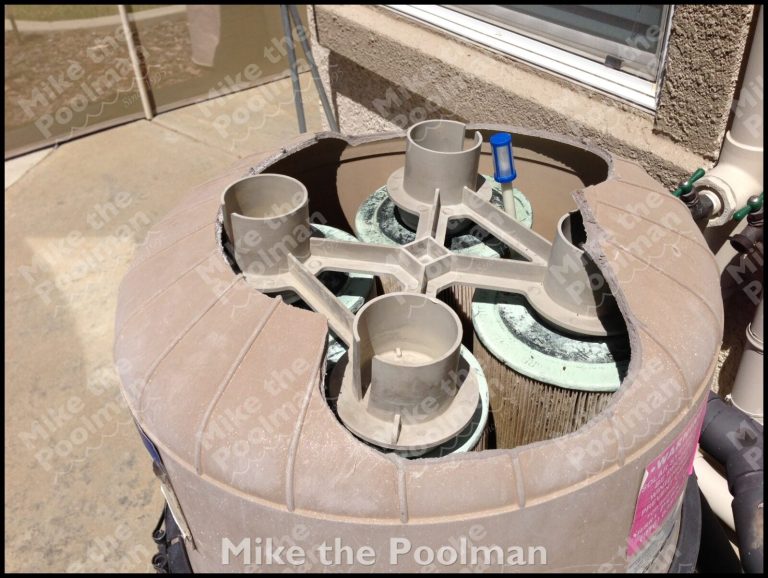
The filter itself is the second major restriction. In a sand filter, the bed traps fine particles over time, and once it stops letting water pass freely, pressure rises at the filter while flow falls at the return. Cartridge filters work the same way, just with pleated paper that clogs from the outside in. Most sand filters need a backwash and a periodic sand change, while cartridges are rinsed or replaced when pleats stay grimy after a hose-down. A cartridge that’s overdue for replacement will make a pump labor for nothing. As a rough guide, many owners replace cartridges every one to three years depending on how much debris the pool sees, and a sand bed often needs fresh media every five years or so. If backwashing no longer drops the pressure back toward your clean baseline, the media is likely spent.
Misaligned Multiport Valves
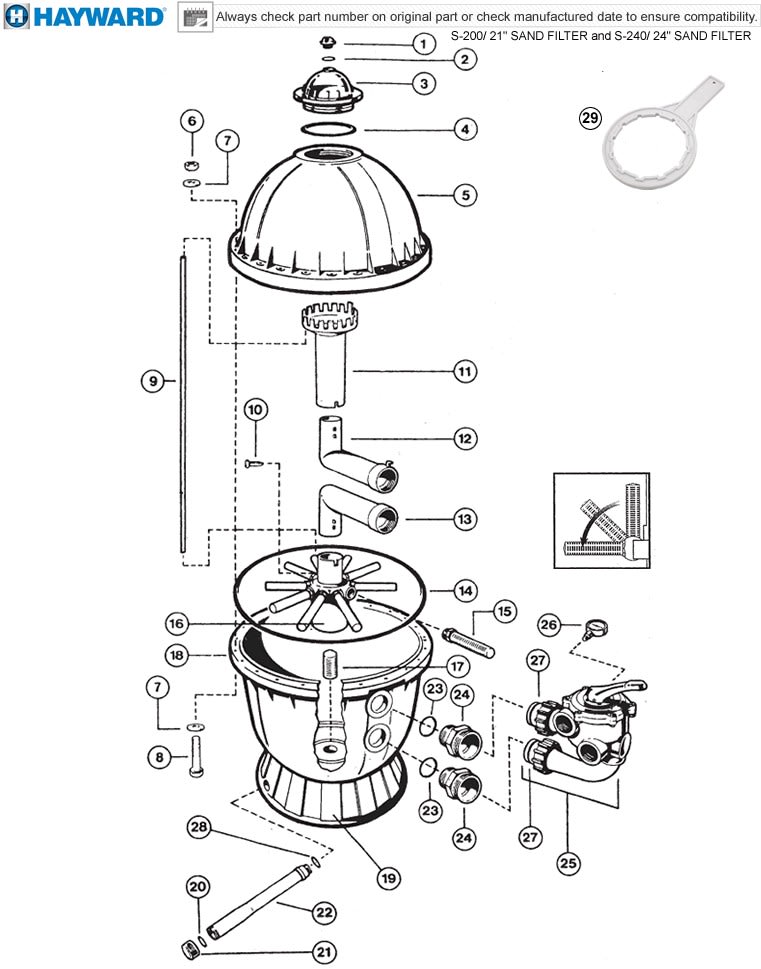
The multiport valve on a sand or DE filter is the handle with several positions: filter, backwash, rinse, waste, and recirculate. If the valve sits between positions or the flapper inside is worn, water can bypass the filter or leak into the waste line. You’ll notice a sudden drop in pressure after someone switches the handle, or water trickling from the waste port when the pump runs. Make sure the handle clicks fully into place, and check the valve’s internal seals if you suspect a leak. A common mistake is leaving the handle in rinse after backwashing, which sends water to waste and keeps the pump working against a bypass. Always finish a backwash by moving the handle back to filter before you walk away.
Worn Impeller Vanes
The impeller is the spinning part that actually moves water. Its vanes can chip, crack, or wear down over years of use, especially if small grit gets through the basket. Worn vanes reduce the force the pump puts on the water, so flow drops even when the filter is clean. This problem develops slowly, which makes it easy to blame on the filter. Pulling the pump to inspect the impeller is a bigger job, and it’s worth a look at the manufacturer’s service manual before you start. Before you open anything, disconnect power at the breaker and confirm the pump is off, because a pump that suddenly starts while you’re working inside it can cause serious injury.
Key Points to Remember About Pressure Loss
- Accumulated debris in the pump basket
- Saturated filter sand or cartridges
- Misaligned multiport valves
- Worn impeller vanes
Each of these four problems reduces flow in a different place, so work through them in order from the pump outward. Start with the basket, then check the filter pressure, then the valve, and finally the impeller. Intex and similar above-ground pumps tend to be more sensitive to basket clogs because their baskets are small, so a quick rinse makes a visible difference. Larger in-ground systems can hide the same problem in a bigger basket, which is why the same routine applies across both types. Working in this order also prevents the common trap of pulling a pump apart when the real issue was a leaf sitting in the strainer.
Keeping Your Pool Pump Flowing Strong
Steady flow comes from a short routine. Check the basket weekly, log the filter pressure after each backwash, and keep an eye on the multiport handle when you run maintenance. If the gauge stays high after cleaning, or flow stays weak after the basket is clear, the filter or impeller probably needs attention, and a pool technician can confirm it with a proper pressure and flow test. Catching these problems early keeps the repair small and the pump running longer. A notebook or a simple phone note with dated gauge readings is often the best diagnostic tool you have, because it shows the slow drift that makes low water pressure in pool pump systems so easy to overlook.
Frequently Asked Questions About Low Water Pressure in Pool Pump Systems
How often should I clean the pump basket?
During normal months, checking the basket once a week is a good baseline. During heavy leaf season or after a storm, you may need to check it every few days. The goal is to never let it fill past halfway, since a packed basket starves the pump and can cause it to run hot.
What psi reading is too high for a pool filter?
Most owners aim to backwash when the gauge sits 8 to 10 psi above the clean reading they recorded after the last cleaning. Your exact number depends on the filter type and the pump, so the most reliable reference is the reading you logged when everything was working well.
Can low water pressure damage my pool pump?
Yes, over time. Running against a restricted filter or a clogged basket makes the motor work harder and can shorten its life. Heat buildup and seal wear are the most common results, which is why catching the problem early matters.
Further Reading
- Saltwater Versus Sand Pump Performance Under Low Pressure Conditions
- Circulation Drops in Sand Based Filters Require Specific Checks
- Sand Filters Compared with DE Filters on Leak and Flow Problems
- Repair or Replace: Decision Points for a Bestway Filter Pump
- 5 Common Failures in Bestway Filter Pumps and Their Fixes