Why Hayward DE Filters Lose Flow Faster Than Sand Models
If your Hayward DE filter is pushing less water than it used to, you are not alone. Hayward DE filter troubleshooting usually starts with a few basic checks, done in the right order. Diatomaceous earth (DE) filters lose flow faster than sand models. The powder coats fabric grids with a layer fine enough to catch particles just a few microns across. Sand beds catch much larger debris, so they tend to run longer between cleanings.
Safety comes first. Shut the pump off at the breaker or timer before you open the strainer lid, pull the basket, or touch the valve. A filter tank can hold water under pressure, so let the system settle and open the air relief valve before you loosen any clamp. Hayward’s official site lists owner manuals and parts diagrams by model number, which is worth checking before you start.
Low flow in a Hayward DE filter usually comes from a clogged pump basket, torn or caked grids, a leaking multiport valve. It also comes from the wrong amount of DE powder. Work through those four checks, then compare clean and dirty pressure readings. A rise of roughly 8 to 10 psi above the clean starting pressure generally means the grids need cleaning or a recharge.
Hayward DE Filter Troubleshooting Steps That Restore Flow
Run these checks in order. The visible, cheap causes come first, and each step rules out one part before you move to the next.
- Confirm pump basket cleanliness. Start at the pump, because a full strainer basket starves the impeller and cuts flow before the filter ever sees the problem. Turn the pump off, close the suction valves if your plumbing has them, and unscrew the strainer lid. Pull the basket, rinse out leaves, hair, and small stones, and check the lid O-ring for cracks. Look at the skimmer basket too, since debris there often ends up in the pump. A clean basket takes about five minutes, and it is one of the most common causes of reduced flow. Reseat the lid so the O-ring sits flat, restart the pump, and watch the gauge settle.
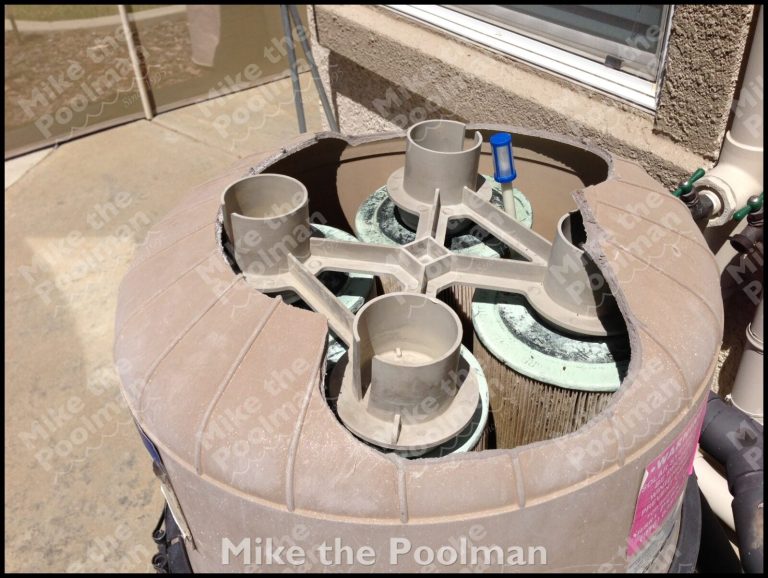
- Inspect DE grids for tears. Relieve the pressure, open the tank, and lift the grid assembly off the center standpipe. Hold each grid up to a light and look for splits in the fabric, bent fingers, or cracks around the cap. A torn grid lets DE and debris bypass into the pool, which usually shows up as cloudy water right after a backwash. Check the manifold too, since a cracked manifold can leak and drop pressure. If a grid comes out intact but the manifold looks damaged, read up on how DE filter components are built and compare your part against the manual. Replace a grid with a visible tear rather than patching it, because recoating only helps when the fabric is intact.
- Check multiport valve seals. The multiport valve sits on top of the tank and routes water through the filter, backwash, rinse, and waste positions. Air or water leaking past its seals lowers the pressure you read at the gauge and can make the pump sound like it is struggling. Unscrew the valve handle, then look at the rotor and seal face for grit, cracks, or a flattened gasket. Lubricate the O-rings with silicone-based grease only, since petroleum products can degrade the seal material. Match any replacement part to the model and serial information on your equipment label. A seal kit is usually a much smaller expense than a whole valve, so try it first.
- Verify correct DE powder dosage. Too little DE leaves gaps in the grid coating, so fine debris passes through and the filter clogs unevenly. Too much DE, usually dumped in at once, can cake the grids and choke flow quickly. The amount depends on the filter’s surface area, and the Hayward EC40 is commonly rated at about 40 square feet of filter area. Check your owner manual for the exact weight, then add the powder slowly through the skimmer with the pump running. Avoid guessing from a scoop. Recharge the filter after every full backwash so the grids carry an even layer again.
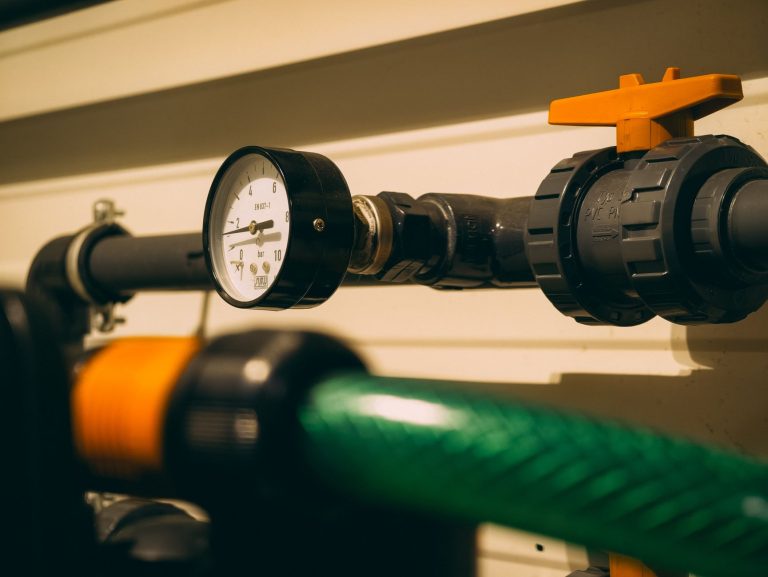
- Test pressure differential across filter. Pressure differential is the gap between your clean-filter reading and the current reading. Record the gauge value right after a full backwash and rinse, then note it again when flow drops. A rise of about 8 to 10 psi generally means the grids are loaded and need attention. If the gauge reads high but flow stays low, the blockage likely sits before the filter, in the pump or suction lines. If the gauge reads low and flow is still poor, suspect a leak or bypass at the valve. This pattern also matches most low water pressure in pool filter complaints. Write the numbers down each time, because the trend tells you more than any single reading.
Logging Readings and Knowing When to Call a Technician
Good hayward de filter troubleshooting depends on the numbers, not on memory. Log the clean pressure, the pressure before backwash, and the flow after each step you complete. A short notebook or phone note is enough. Patterns show up quickly. If the basket is clean and the grids are intact but the gauge still climbs fast, the problem is usually the valve or a plumbing restriction.
Call a technician if you find a cracked valve body, a damaged manifold, or a pump motor that runs hot or hums without moving water. Those issues need proper tools and parts, and the risk of injury or water damage goes up. If your Hayward EC40 filter problems continue after these checks, a professional pressure test can confirm where the restriction sits.
About this guide: This is a general owner-level checklist for Hayward DE filters, based on standard pool maintenance practice and common manufacturer conventions. It does not replace the manual for your specific model.
Related Topics
- Hayward Filter Versus Other Pool Filter Systems: Which Suits Your Pool?
- Cracked Filter Housing or Clogged Algae Filter: What Is Actually Wrong?
- Hayward Pool Heater Leaking Water: Where It Comes From
- Troubleshooting Your Pentair Quad DE Filter
- Why Is My Pool Pump Leaking From the Top? Causes and Fixes