Why Your Pool Pump Stops and Where to Look First
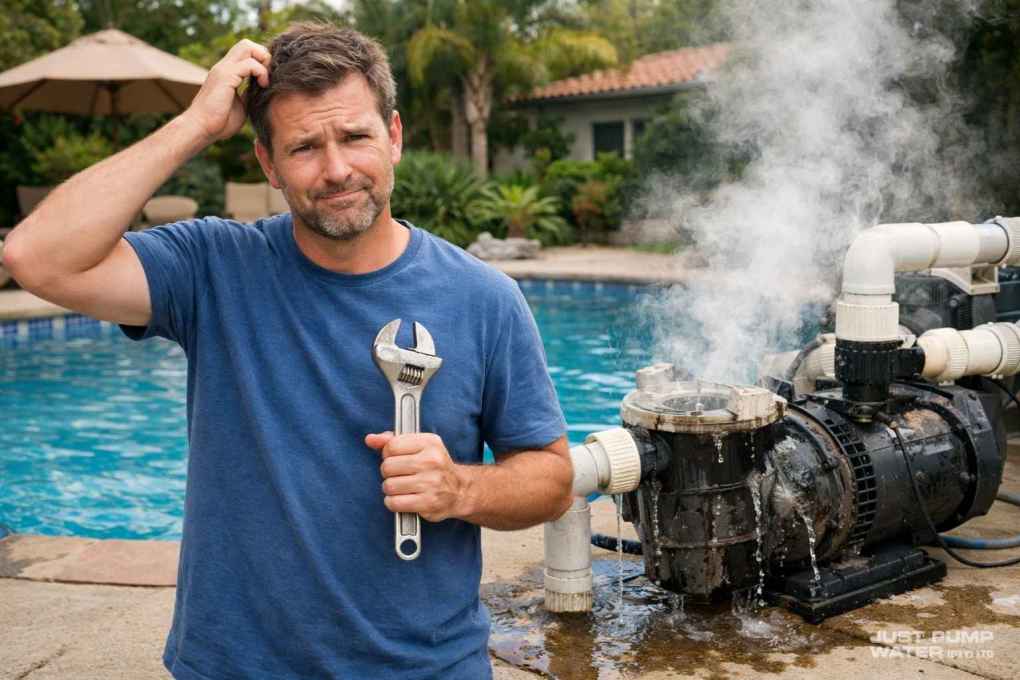
Few things sink a pool season faster than a pool pump not working on a hot afternoon. The motor may stay silent, hum without turning, or run while barely moving any water. Each symptom points to a different cause, so it helps to know which one you’re seeing before you touch anything.
A pool pump is the part of the circulation system that pulls water through the filter and pushes it back into the pool. When it stops, the water stops being cleaned, and algae can start within a few days. The good news is that most failures can be narrowed down with a short, fixed sequence of checks.
Pool pump not working complaints usually trace back to power, timing, a stuck or failing motor, overheating, or a flow problem. Working through them in order keeps you from replacing a part that was never broken. Pool circuits also fall under the National Electrical Code, and some of the repairs below need a licensed electrician, so those are flagged as you go.
The quick answer is that most stalled pool pumps can be diagnosed by checking power first, then the timer, then the motor and the flow path. A humming motor that won’t spin usually points to a failed start capacitor or a seized shaft. Anything involving burnt wiring, repeated breaker trips, or a motor that won’t turn freely should go to a licensed electrician or pool technician.
The Five Checks to Run on a Stalled Pool Pump
Work through these checks in order. Each one rules out a group of causes, and most take only a few minutes. Turn the pump off at its control panel before you open any housing or touch the wiring.
Pool Pump Not Working? Check It in This Order
Power problems cause more no-start calls than anything else, so begin there. A pump that gives no sign of life, not even a hum, often has no power reaching it at all. Check the breaker, the GFCI, and the switch before you assume the motor is dead.
- Power: Check the breaker in the main panel first. Pool pumps usually run on a dedicated breaker; inground pumps commonly use 240 volts in U.S. homes and smaller above-ground pumps 120 volts, so check the motor nameplate. A tripped breaker often sits in a middle position, so push it fully off and then back on. Next, look for the GFCI (ground-fault circuit interrupter) on the cord, the outlet, or the control box. If it has tripped, press reset once. If it trips again right away, there is a fault somewhere in the motor or wiring, so stop resetting it and have it inspected. The GFCI is doing its job when it trips, and a repeat trip is a warning, not a nuisance.
- Timer or automation: Check the timer or automation controller next. Many pumps stop because the schedule runs only for a short window, or because the clock lost its setting after a power outage and now shows the wrong time. Confirm the current time and the on period. Then switch the pump to manual override or run mode. If it starts in manual, the fault lies in the timer or its program settings. Mechanical timers can also wear out at the contacts, and a dead timer will leave the motor silent even when everything else works. Replacing a timer is usually a straightforward job for a handy owner, but check local code and your system’s manual first.
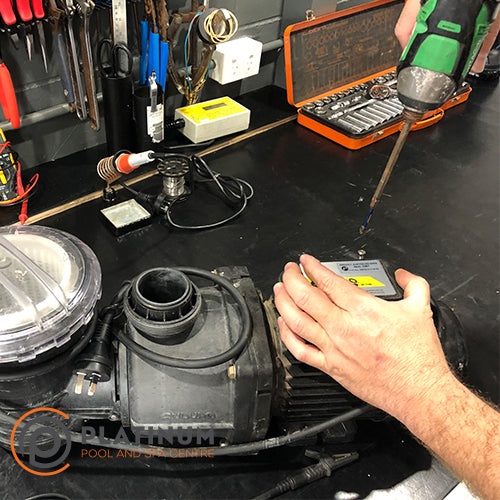
- Humming without spinning: A motor that hums but won’t turn is telling you that power arrives, but the rotor can’t get moving. The most common cause is a failed start capacitor, the small cylinder mounted on the motor housing that gives the motor the push it needs to start. A second cause is a seized shaft or a clogged impeller, often from leaves, grit, or a small stone. With the power off at the breaker, try turning the shaft by hand, or the fan end on a motor that has one. If it won’t move, debris or a bearing is the likely culprit. Capacitors can hold a dangerous charge even after the power is off, so don’t touch the terminals. A stalled rotor draws heavy current and heats up quickly, so do not leave a humming motor switched on.
- Thermal overload: If the pump runs for a while and then shuts off, the motor may be tripping its thermal overload protector. Overloads usually come from restricted airflow, a motor sitting in direct sun without room to breathe, or a pump working against a clogged filter. Let the motor cool fully before you try again, which can take an hour or more on a hot day. The protector only resets once the windings have cooled. Then clear leaves, grass clippings, and dirt from around the motor vents. Make sure nothing is blocking the fan. If the motor trips again after cooling and clearing, the bearings or windings may be failing, and a technician should look at it before it burns out.
- Runs but no flow: If the motor spins but water barely moves, the pump is probably drawing air or running dry. Start with the skimmer and pump basket, because a full basket chokes flow. Empty it and clean it. Next, make sure the pump is primed, meaning the pump housing and suction line are full of water. Check the lid o-ring for cracks or debris and make sure the lid seats evenly. A loose or worn lid is a common source of an air leak in pool filter plumbing, and that air will keep the pump from pulling water. Finally, confirm that the suction and return valves are open, and that the filter pressure gauge reads within the range listed in the manufacturer’s manual.
Questions Owners Ask About a Pool Pump That Won’t Start
How long does a pool pump motor last?
Lifespan depends on how often the pump runs, how hard it works against the filter, and how well it’s maintained. Motors that run long hours in hot climates tend to wear faster than those in mild weather. Keeping the basket clean, the vents clear, and the bearings lubricated where the manual calls for it all help. There is no single number that fits every installation, so a failing motor is better judged by its symptoms than by its age. The guide to how long pool pump motors last covers those symptoms.
Is it safe to reset a GFCI that keeps tripping?
One reset is a reasonable step after a storm or a power surge. A GFCI that trips again immediately, or keeps tripping under normal operation, is detecting current leaking to ground. That can come from a damaged cord, water in the motor, or a failing motor winding. Resetting it repeatedly removes the protection that’s meant to prevent shock. Have an electrician find the fault instead of bypassing the device.
Can I open the motor myself to check it?
Only with the power fully disconnected and the breaker locked off. Capacitors can store a charge after the power is off, so discharge them carefully or leave that work to a pro. Many owners can handle a basket cleaning, a vent check, or a lid inspection safely. Opening the motor housing, testing windings, or replacing a capacitor usually belongs with a licensed technician.
Does a humming pump always mean a bad capacitor?
Not always, but it’s the first thing to suspect. A failed start capacitor is a frequent cause of a humming motor that won’t turn. A seized bearing, a jammed impeller, or a low-voltage supply can produce the same symptom. Test or replace the capacitor only after confirming the shaft turns by hand. If it doesn’t, the capacitor alone won’t fix the problem.
When to Stop Troubleshooting and Call a Technician
Most stalled pumps come down to a breaker, a timer setting, a clogged basket, or a lid that lets air in. Those are fixes you can handle with a screwdriver and a few minutes. A pool pump not working after every reset is a sign that something deeper has failed, and continuing to restart it can damage the motor further.
Call a licensed electrician or pool technician if the GFCI keeps tripping, the breaker trips repeatedly, you see scorched wiring or a burnt smell, or the motor hums and the shaft won’t turn freely. When you call, describe the symptoms in order, say which checks you already ran, and note the pump’s make, model, and voltage from the nameplate. For bigger jobs, read up on fixing a pool pump before you agree to a full replacement, so you can ask the right questions.