How Sand Filters Lose Flow Over Time
Low water pressure in pool filter systems rarely shows up overnight. Most sand filters lose flow slowly, a little each week, until one day the return jets look weak and the pump sounds strained. That gradual slide is what makes it easy to miss. Plenty of owners notice the change only after a friend comments that the water seems to sit still near the skimmer, or after the pump runs noticeably longer to get the same turnover it used to manage in May. By then the filter has been struggling for weeks.
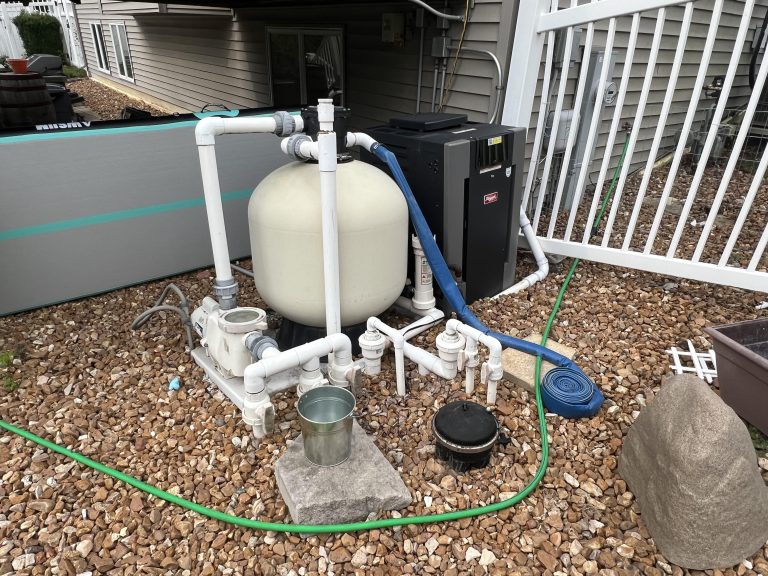
A sand filter works by trapping debris in a bed of silica sand as water moves down through it. Over time that bed collects fine particles, body oils, and mineral scale. Water has to push harder to get through the packed material, so pressure climbs while flow drops. Intex units, with their compact tanks and smaller pumps, show these changes quickly. A small tank has less media volume to absorb the load, so a season’s worth of sunscreen and leaves can shift the numbers faster than it would in a large commercial-style filter. Our wider coverage of how sand filters are built explains the basic design, and this article stays focused on what changes inside the system and how to check it.
low water pressure in pool filter systems usually comes from restricted flow, not a failed pump. Compacted sand, a full pump basket, a worn lid gasket, or a partly turned valve can each reduce circulation. Check the basket first, then the gauge, then the valve positions. Backwash only when the gauge reads about 8 to 10 PSI above its clean baseline. Starting with the cheapest and quickest checks saves you from tearing into the valve when the real problem was a clump of leaves sitting in the strainer.
Pressure Behavior in Intex and Comparable Sand Systems
Pressure in a sand system is a balance. The pump pushes water in, and the media, plumbing, and valve push back. When the resistance grows and the pump stays the same, flow falls. The sections below cover the usual sources of that extra resistance, roughly in the order they tend to appear. Think of it as a chain of places where the water has to squeeze through, and the weakest link in that chain sets how much water comes back into the pool.
What Compacted Sand Does to Low Water Pressure in Pool Filter Tanks
Sand grains settle and pack together over a season of use. Fine debris fills the gaps between them, and the bed becomes dense. Water then finds the easiest route, which is usually a channel that cuts straight down one side of the tank. The rest of the bed barely gets used, so the filter stops doing its job even though pressure looks high. You can sometimes spot this on a sand bed that has been opened for service: one side is dark and caked, while the other looks almost clean.
A short backwash often fails to break up that packed layer. Many owners run the backwash for under a minute and assume it was enough. Commonly, a backwash of two to three minutes, until the sight glass runs clear, gives the bed a better chance to loosen. Watch the sight glass closely the first time you do it, because the water often starts cloudy and brown before settling to clear. Sand that stays compacted despite regular backwashing is a sign the media is worn out. Replacement intervals of three to five years are common, though water chemistry and bather load change the timing a lot. A heavily used pool in a hot climate may need new sand sooner, while a lightly used pool with balanced chemistry can go longer.
Valve and Gasket Wear
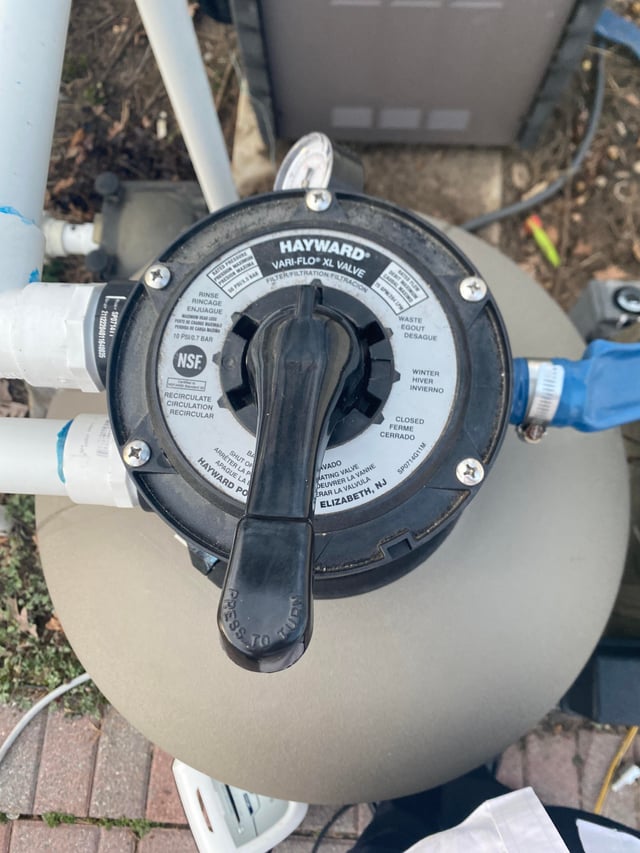
The multiport valve sits on top of the tank and directs water between filter, waste, backwash, and rinse. Its internal seals wear over time. A worn seal can let air into the suction line or let water bypass the filter entirely. Either problem reduces the flow you feel at the return jets. Turn the handle through each position until it clicks, and watch for a spot where flow suddenly changes. A valve that feels gritty or sticks between positions often has debris or a dried seal inside, and forcing it can crack the top of the tank, so ease it gently and never use a wrench.
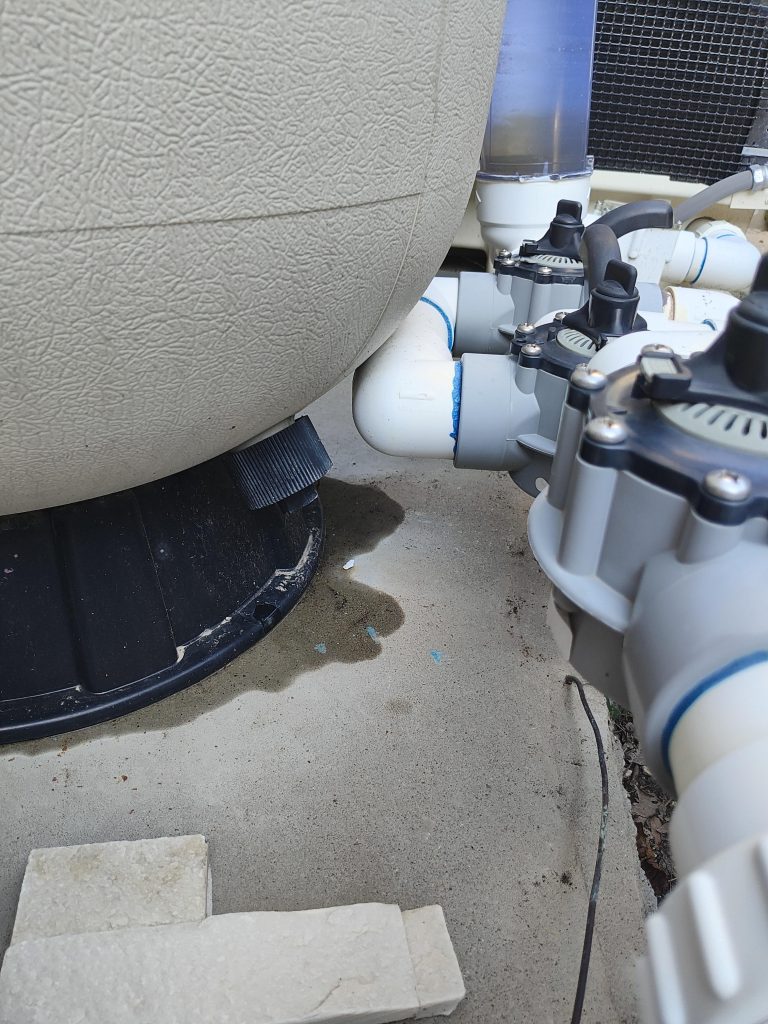
The lid O-ring is the other common weak point. Drying out or a hair caught under the seal can produce a slow air leak on the suction side. You may see bubbles in the sight glass or hear the pump gurgle. Air leaks are not the same as cracks, so they need a different fix. If you find water dripping rather than air bubbling, read about a gasket failure before tightening anything. Lightly lubricate the O-ring with a silicone-based lubricant, and make sure it sits flat in its groove. Avoid petroleum-based products, which can swell and degrade rubber seals over time.
Pump Basket and Strainer Maintenance
The strainer basket sits ahead of the pump and catches leaves, hair, and small debris. When it fills, the pump has to pull water through a smaller opening. The result is a suction restriction that looks like a filter problem but starts at the front of the system. Many people blame the motor when the real cause is low water pressure in pool pump circulation coming from a clogged basket. A quick test is to clean the basket and restart the pump: if the return flow improves immediately, you have saved yourself an hour of unnecessary troubleshooting.
Check the basket every few days during leaf season, and clean it after storms. Shut the pump off before you open the lid, and keep the water level above the skimmer opening so the pump does not pull air. A basket that is cracked or missing its gasket lets debris bypass the screen and reach the impeller. Clean the impeller too if you can reach it safely. Many owners find a small stone or a wad of hair lodged between the vanes the first time they look. A clean basket is the cheapest fix in this whole list, and it is the step most often skipped.
Seasonal Water Chemistry Effects
Water chemistry changes with the seasons, and that change shows up inside the filter. High calcium hardness and high pH can encourage scale. Scale forms as calcium carbonate comes out of solution, coating sand grains and the laterals underneath them. A scaled bed holds less debris per cycle and clogs sooner than it should. Keeping pH in the commonly recommended range of about 7.2 to 7.8 slows that process. If you live where the source water is hard, a test kit once a month will show you whether the numbers are drifting before the scale becomes visible.
Warm months bring algae, sunscreen oils, and heavy use. Algae bloom fast and can clog a sand bed within days. A heavy dose of shock also adds debris that the filter must catch. When you treat a green pool, expect the gauge to climb faster than usual. Run the filter longer during these periods, and backwash sooner than your normal schedule calls for. Seasonal effects are predictable, so you can plan around them. Many owners who clean up a green pool and then wait a week before backwashing end up with a filter that is clogged far beyond what the schedule suggested.
Reading the Pressure Gauge
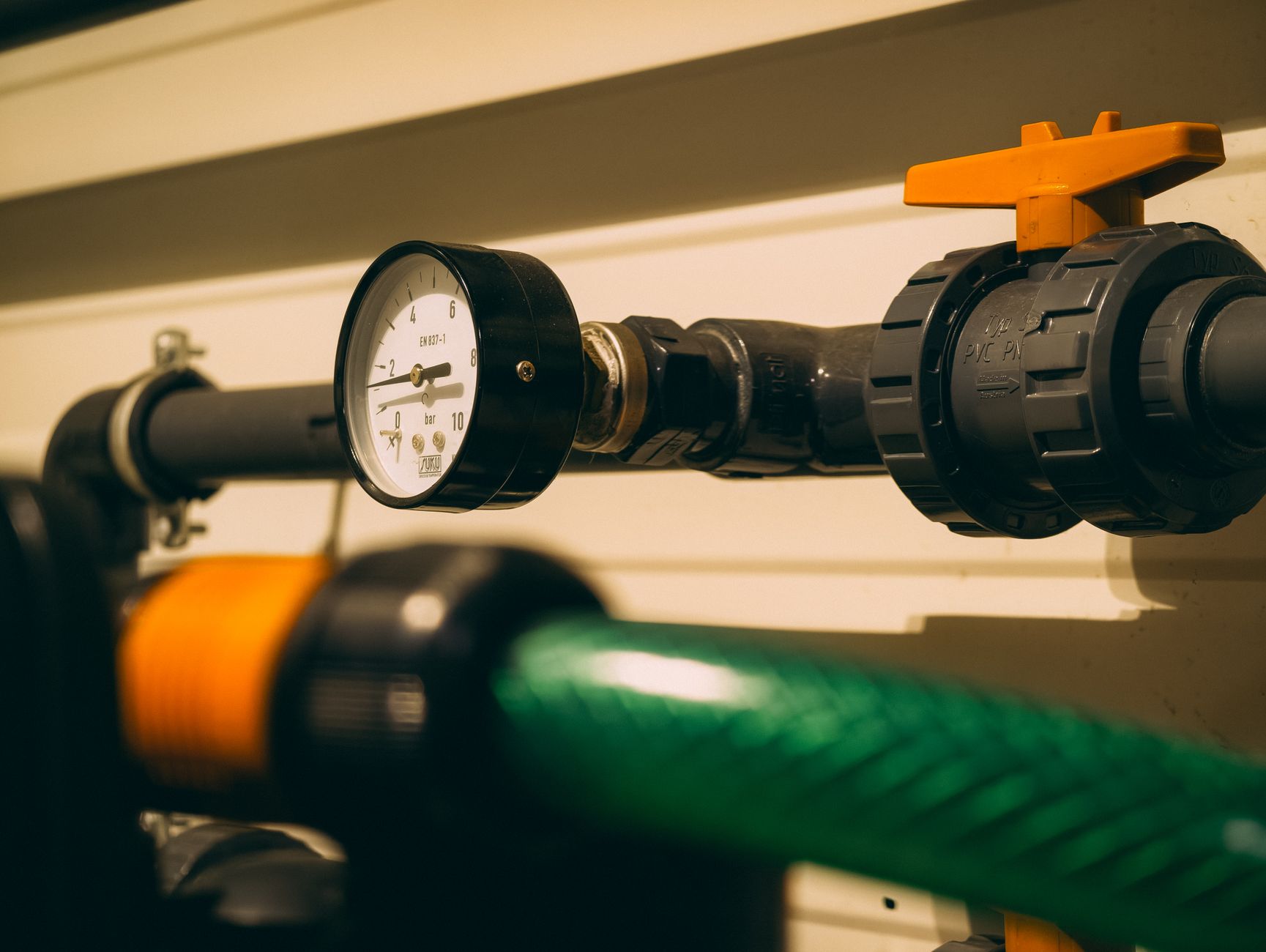
The gauge is the most useful tool you already own. Record its reading right after a backwash and rinse. That number is your clean baseline. Later readings only mean something when you compare them with it. A rise of about 8 to 10 PSI above the baseline is a common rule of thumb for backwashing, and the exact figure depends on your model. Some owners tape a note to the filter with the clean reading and the date, which makes the comparison easy even when you are tired and standing in the equipment pad at dusk.
Pressure and flow can point to different causes. High pressure with weak return flow usually means restriction on the discharge side, such as dirty media, a closed return valve, or a clogged heater. Low pressure with a loud, gurgling pump usually means restriction on the suction side, such as a full basket or an air leak. A gauge that jumps suddenly often points to a valve or plumbing change. A gauge that creeps up over weeks points to the media.
Early Warning Patterns
Most filters give warning signs well before they fail. The return jets look weaker than usual, or the skimmer water level drops and stays low. The pump may cycle off and on, or sound louder than it did last season. Each of these is worth a check the same day. Waiting usually makes the eventual cleanup longer, and a filter that has been running starved for a week can overheat the pump motor and shorten its life.
Timing matters as much as the symptom. A flow drop that begins right after backwashing often points to a valve or gasket issue, because the valve moved and the seal did not seat. A slow decline over several weeks points to the media or chemistry. A pump that runs hot or noisy is a sign the suction side is starved. Touch the housing carefully and check the basket first. Write down what you notice and when, because patterns show up in notes long before they show up in memory.
Keeping Circulation Steady Between Service Visits
These habits catch most sand filter flow problems before they become expensive:
- Record the gauge reading right after each backwash so you have a clean baseline to compare against.
- Clean the strainer basket every few days during leaf season, and after storms or heavy debris.
- Backwash for two to three minutes until the sight glass clears, instead of stopping after a short burst.
- Keep pH and calcium hardness in commonly recommended ranges to slow scale and reduce clogging.
Once these become routine, most flow complaints disappear. The few that remain usually trace back to a valve, a gasket, or media that has reached the end of its useful life.
Why Steady Observation Pays Off
Sand filter flow rarely fails in one dramatic moment. It fades through compacted media, worn seals, full baskets, and chemistry that drifts out of range. The gauge, the pump sound, and the return jets are your early warning system. Reading them each week lets you separate a basket chore from a valve repair from a sand replacement. That separation saves time and money.
Keep a simple log of gauge readings, backwash dates, and any changes you notice. If low water pressure in pool filter readings keep returning after basic cleaning, the cause is usually deeper in the system. Our other pool filter problems articles walk through those deeper checks, and they are the best next step when the simple fixes stop working. A log also helps a technician diagnose the problem quickly if you do end up calling for help, since they can see the trend rather than guessing from a single snapshot.
Frequently Asked Questions
How often should I backwash a sand filter?
Most owners backwash when the gauge rises 8 to 10 PSI above the clean baseline, which often works out to every few weeks in a typical season. During heavy use, algae treatment, or leaf season, you may need to backwash more often. The gauge is a better guide than a fixed calendar.
Can a low water pressure problem fix itself?
Usually not. Compacted sand, a clogged basket, and worn seals tend to get worse over time. A simple cleaning often restores flow, but if it does not, the cause needs to be identified rather than waited out.
Is my pump failing if the flow is weak?
Not necessarily. Weak flow is most often caused by restriction in the filter, basket, or plumbing. Check those first. A pump that is truly failing tends to show other signs, such as overheating, humming without moving water, or a burning smell.
Why does my pressure jump right after I add chemicals?
Shock treatments and algaecides can release debris, dead algae, and fine particles into the water. The filter has to catch all of it, which loads the bed quickly. Run the filter longer after treatment and backwash sooner than your usual schedule.
How do I know if the sand needs replacing?
If the bed stays compacted despite thorough backwashing, the flow remains low after cleaning, and the media is more than three to five years old, replacement is likely the right move. Sand that has channeled or scaled heavily rarely recovers fully.
Further Reading
- Saltwater Versus Sand Pump Performance Under Low Pressure Conditions
- 5 Common Failures in Bestway Filter Pumps and Their Fixes
- Resolving Low Flow In Hayward DE Filters Through Systematic Checks